Last updated: June 2026
The Ourika Valley is genuinely worth doing. It is also genuinely overrun on summer weekends, full of sales stops that tour operators call “cultural experiences,” and the waterfall hike is harder than any brochure will tell you. Here is what you actually need to know before you go.
What the Ourika Valley Is (and Why People Go)
The Ourika Valley sits about 60 km south of Marrakech, cutting through the High Atlas foothills along the Ourika river. In practice, it is the closest green, cool, mountain scenery to the city - which explains its popularity. Temperatures in the valley run 5-8°C lower than Marrakech in summer, and for visitors arriving in July or August having spent three days sweltering in the medina, that alone feels like a reason to book.
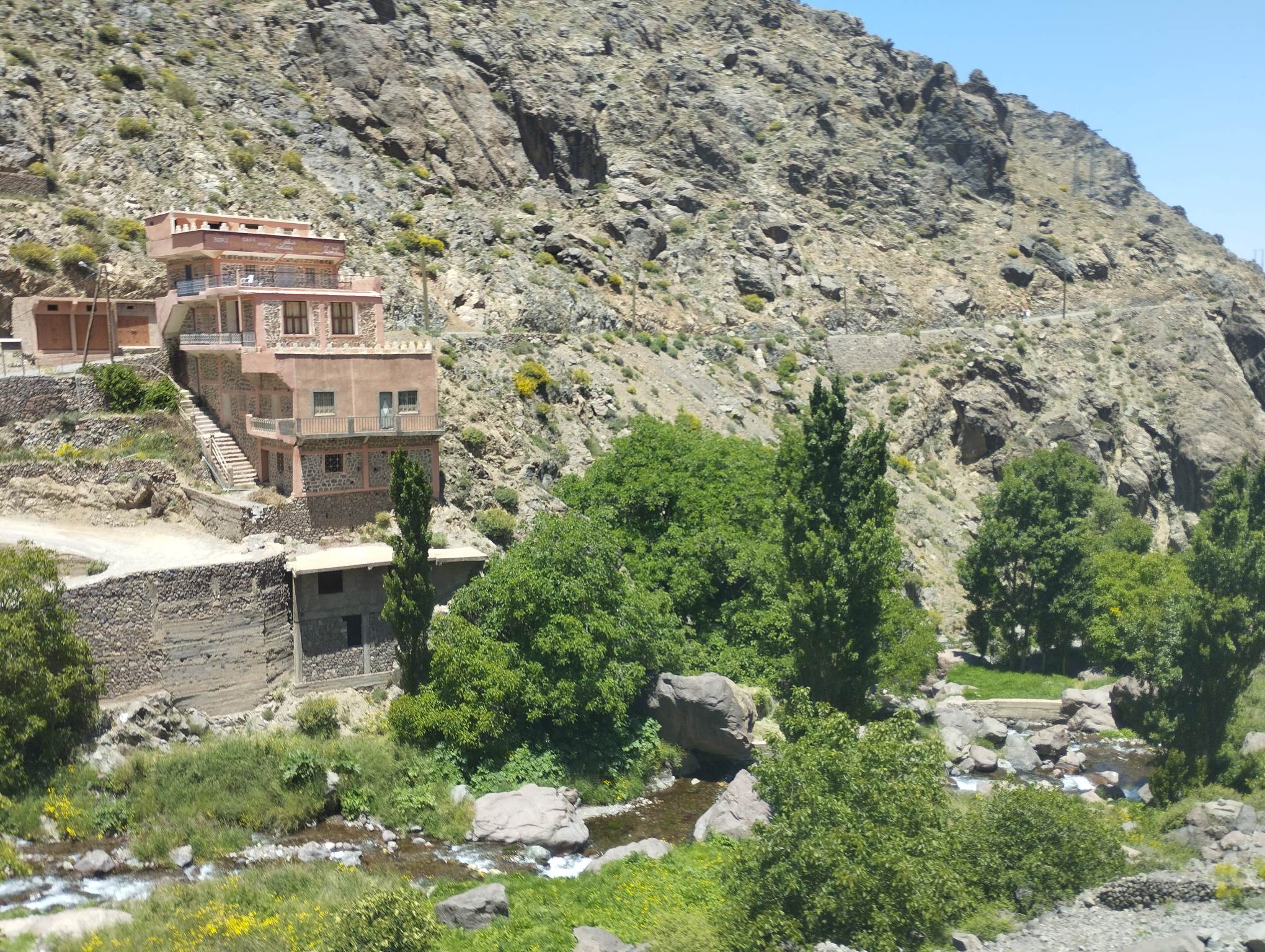
The valley itself is a long ribbon of Berber villages, terraced gardens, and a river that runs fast and red in spring, then slows to a trickle by late August. The road ends at the village of Setti Fatma, where the waterfalls are. Most day trips combine the drive up, a stop at an argan oil cooperative, a Berber village or lunch in a local house, the waterfall hike, and then the drive back. You can do all of it in about eight hours.
If you are looking for the wider context around Atlas Mountain excursions, the Atlas Mountains day trips guide covers how Ourika fits alongside Imlil, Toubkal, and the Ait Benhaddou route.
Getting There: Organised Tour vs Grand Taxi
You have two real options.
Organised group tour: Shared day trips run from around €15-25 per person from Marrakech, typically departing between 8:30 and 9:30am and returning by 5pm. These include pickup from your riad, a guide, transport, and usually lunch at a riverside restaurant or local house. Private tours start at around €90-100 for a vehicle of up to four people. Book through a reputable operator - you can browse available dates and group sizes via the Explora Morocco tours page.
Grand taxi: This is the DIY option and it is cheap. Shared grand taxis (the big old Mercedes estates, six passengers) leave from the Bab Rob taxi station in Marrakech. A shared seat to Ourika costs around 20-30 MAD (roughly €2). Hiring the whole taxi costs around 300-450 MAD return for the vehicle, depending on your negotiation and the driver. The grand taxi does not go all the way to Setti Fatma - it stops partway up the valley, at which point you haggle for a local van or minibus to continue. It is an adventure but it adds time and hassle, and if you are travelling solo or as a couple, the cost saving over a shared organised tour is not as significant as it looks on paper.
Driving time: Allow 1 to 1.5 hours from Marrakech to Setti Fatma, depending on the route out of the city and traffic. The road climbs gradually and the scenery improves considerably as you pass the 30 km mark.
See the Marrakech travel guide for notes on navigating grand taxi stations, which can be chaotic if you have not used them before.
The Argan and Saffron Stops: What They Actually Are
Almost every organised day trip includes a stop at an argan oil cooperative. These are presented as cultural visits - and there is something genuinely interesting about seeing how argan oil is produced, with women cracking the hard nuts by hand and cold-pressing the oil. The cooperatives do support local Berber women’s employment, and that part is real.
What is also real: it is a sales stop. You will be shown products, offered tastings, and invited to buy. Argan oil, argan-based cosmetics, rose water, black soap, amlou (an almond and argan paste that is worth buying). The pressure is usually soft rather than aggressive, but you should go in knowing the format.
Saffron stops work the same way. The Ourika Valley does produce saffron, and some tours include a brief visit to a farm or small shop. Again, you can learn something and the product is real, but the stop exists because the operator gets a commission on sales.
Neither stop is something to resent - just know what you are walking into so you can enjoy the genuine parts and politely decline if you do not want to buy.
The Setti Fatma Waterfall Hike: Honest Conditions
The hike to the Setti Fatma waterfalls is the centrepiece of most Ourika day trips, and it is consistently misrepresented as “accessible to all.”
There are seven waterfalls in total, cascading up the gorge above the village. Here is the honest breakdown:
- Falls 1-2: Reachable in 20-40 minutes, manageable for most fit adults and families with older children. Good path, some scrambling at the end.
- Falls 3-4: Require proper footwear and comfort with heights. The trail involves scrambling over boulders and exposed sections above the river. Allow around an hour to reach fall 4.
- Falls 5-7: These are for confident hikers only. The path is steep, loose in places, and involves real scrambling. If you have weak knees, vertigo, or ankle problems, stop before here.
Guides will approach you at the trailhead offering their services for 100-200 MAD. You do not need a guide to reach the first two waterfalls. For falls 3 and above, a guide is worth having - not because the route is genuinely hard to follow, but because the terrain is tricky enough that having someone who knows it reduces the chances of a stumble on the way down. Agree a price before you start. If your organised tour includes a guide, check whether they accompany you on the hike or just wait at the restaurant.
Wear proper shoes - not sandals, not trainers with no grip. The rocks are slippery when wet, which is most of the time near the falls. Summer afternoons see the most visitor pressure on the trail; if you can get there before noon, do.
During Ramadan and on public holidays, the valley gets exceptionally crowded at weekends. Ourika is Marrakech’s escape valve and half the city has the same idea. Weekday visits are noticeably quieter.
The Friday Souk
The village of Setti Fatma holds a weekly market - a souk - most Fridays. If your visit falls on a Friday, it is worth timing your arrival to catch it. It is a working market, not a tourist market: local farmers selling produce, households buying supplies, the normal business of a valley community. You will see livestock, sacks of grain, vegetables, and household goods. You can wander through without any obligation to buy, and you are unlikely to be hassled. It is a good counterpoint to the organised-tour circuit.
Berber Village Visits and Lunch in a Local House
Many tours include a stop at a Berber village or a meal hosted by a local family. These range from genuinely warm experiences to fairly stagey ones - there is no way to know in advance which you will get. The more established, cheaper tours tend toward the rehearsed end. Smaller private tours with a local guide you have vetted tend to be better.
If lunch is included, it will typically be a tagine or couscous served at a riverside restaurant or a family house terrace. Expect to pay 80-150 MAD (roughly €8-14) if you are buying your own. The restaurants along the river at Setti Fatma are pleasant and the setting is good - green terraces above the water, Atlas peaks behind. It is one of the genuinely nice parts of the trip.
How Touristy Is It, Really?
Fairly touristy, especially in summer. The road to Setti Fatma is the kind of road that coaches can handle, and they do. There are souvenir stalls, men with camels and donkeys offering rides for photos, and a solid concentration of guided groups at the waterfall trailhead.
That said, the valley is long and the villages are spread out. If you get off the standard script - walk further up, visit on a weekday, or go in spring before the summer rush arrives - you will find stretches of the valley that feel entirely ordinary and Moroccan. The area around Aghbalou, partway up the valley, is quieter than Setti Fatma and gives a better sense of what everyday Ourika life looks like.
The trick is not to fight the touristic infrastructure but to use it efficiently and then step outside it.
Timing: When to Go
Best months: April-May and September-October. Spring brings good waterfall flow, cooler air, and almond or cherry blossom on the valley sides. Early autumn has clear mountain light and smaller crowds.
Avoid: Summer weekends (July-August Saturdays and Sundays are very busy). Midsummer heat is also a consideration - the valley is cooler than Marrakech but it still gets hot by afternoon.
Avoid entirely: The valley is prone to flash flooding after heavy rain, particularly in autumn and early spring. In August 2024, flash floods caused significant damage in the Ourika Valley area, closing sections of road temporarily. Check conditions if you are visiting after heavy rainfall anywhere in the Atlas. The best time to visit Morocco guide covers the wider seasonal picture.
Costs: A Realistic Budget
| Item | Budget | Mid-Range |
|---|---|---|
| Shared organised tour | €15-25 pp | - |
| Private tour (1-4 people) | - | €90-150 |
| Grand taxi (shared) | €2-3 pp each way | - |
| Grand taxi (whole vehicle, return) | 300-450 MAD (~€27-40) | - |
| Waterfall guide (local, falls 3+) | 100-200 MAD (~€9-18) | - |
| Lunch | 80-150 MAD (~€8-14) | - |
| Water and snacks | 30-50 MAD | - |
Bring cash. ATMs in the valley are limited, and the restaurants, guides, and market sellers operate on cash.
What to Skip
- The “herb demonstration” that sometimes gets added to itineraries. It is a sales stop for essential oils and cosmetics dressed up as education. You can spend the time at the waterfall instead.
- Mule rides up to the waterfalls. Save it for somewhere the animals look looked after. The trail is walkable.
- Rushing. The mistake most people make on an Ourika day trip is trying to fit in too many stops. Pick the cooperative visit or the souk; do not try to do everything on one ticket and end up spending 20 minutes at each.
For a different take on what costs nothing in Morocco’s cities, see our free things to do in Marrakech guide.
Booking the Trip
The simplest way to get to Ourika without the grand taxi negotiation is to book a guided day trip. Browse available options through Explora Morocco’s tours to find shared and private Ourika Valley day trips with current pricing and availability.
Frequently Asked Questions
How long is the drive from Marrakech to Ourika Valley?
The drive from central Marrakech to Setti Fatma at the top of the valley is roughly 60 km and takes 1 to 1.5 hours, depending on traffic leaving the city and road conditions. Organised tours typically account for this in their schedule.
Do I need a guide for the Setti Fatma waterfall hike?
For the first two waterfalls, no - the path is clear and well-worn. For waterfalls three and above, hiring a local guide at the trailhead (100-200 MAD for the group) is worth doing. The upper sections involve scrambling over boulders on steep, slippery terrain and the trail is less obvious.
Are the argan oil cooperatives legitimate or just sales stops?
Both. The cooperatives do support local Berber women’s employment and the production process is real - you can learn something from the visit. But the format is a sales pitch, and your tour operator earns a commission on purchases. Go in with that context and you will enjoy it more than if it catches you off guard.
Is the Ourika Valley suitable for families with children?
Yes, with caveats. The drive is easy and the lower valley is family-friendly. The first two waterfalls are reachable with children over about eight who are comfortable on uneven ground. The upper falls are not suitable for young children or anyone unsteady on their feet. Lunch by the river is genuinely nice for families.
What day is the Setti Fatma souk?
The weekly market at Setti Fatma is held most Fridays. It is a working local market rather than a tourist market - useful to know if you want to see the valley functioning normally rather than just set up for visitors.
How busy does the Ourika Valley get?
In July and August, particularly on weekends, it gets very busy - coaches, guided groups, and Marrakechis escaping the city heat all converge on the same narrow valley road. Spring and autumn weekdays are significantly quieter. The valley is always going to have some tourist infrastructure given its proximity to Marrakech, but it does not feel like a theme park if you avoid peak hours and peak season.
Ready to Book?
Browse curated Morocco tours from verified operators, filtered by interest and budget.
Find Your Perfect Tour