Marrakech unpacked: honest entry prices, the sights worth your time, the ones to skip, where to stay, scams to dodge, and real costs.
Last updated: June 2026
Marrakech is one of the most disorienting, photogenic, and frankly exhausting cities most travellers will ever visit. It rewards patience and punishes assumptions. Go in knowing what to expect - the sensory overload, the commission economy, the navigational confusion inside the medina - and you will have one of the best weeks of your life. Go in blind and you will spend half of it frustrated.
This guide is based on six trips to Morocco since 2017 and is written to give you the unfiltered version, not the postcard one.
Getting Your Bearings: Medina vs Gueliz
Marrakech divides into two worlds. The medina vs Gueliz question is the first to sort before booking accommodation.
The medina is the ancient walled city - 90% of tourist sights are here, in narrow lanes not built for motor traffic. Getting lost is inevitable and occasionally wonderful. Google Maps is unreliable inside the walls; it routes confidently through dead ends.
Gueliz (Ville Nouvelle) is the French colonial district: wide boulevards, pavement cafes, pharmacies, and considerably less attention from strangers. About 2 km northwest of Jemaa el-Fnaa - a 10 minute taxi or 25 minute walk. Better for evening meals; less interesting to explore.
Honest advice: stay in the medina for at least two nights. If the constant navigation and noise gets to you, shift to Gueliz for the rest of your trip.
Getting In from the Airport
Marrakech Menara Airport (RAK) is 6 km from the city centre. Full details at the airport guide; key 2025-2026 numbers:
- Bus Line 19 (ALSA): 30 MAD (~€3) one-way, every 20-30 minutes, 6am to midnight. Takes 35-50 minutes to Jemaa el-Fnaa. Cheapest option; drops you outside the medina walls.
- Petit taxi: 150-250 MAD by day, 200-300 MAD at night. Insist on the meter or agree a price before getting in.
- Careem/Uber: 120-220 MAD upfront, no negotiation. Usually the easiest option.
- Pre-booked private transfer: 300-600 MAD for up to 4 people. Good for late-night arrivals with luggage.
The Key Sights: Worth It, Overhyped, Skip
Worth it
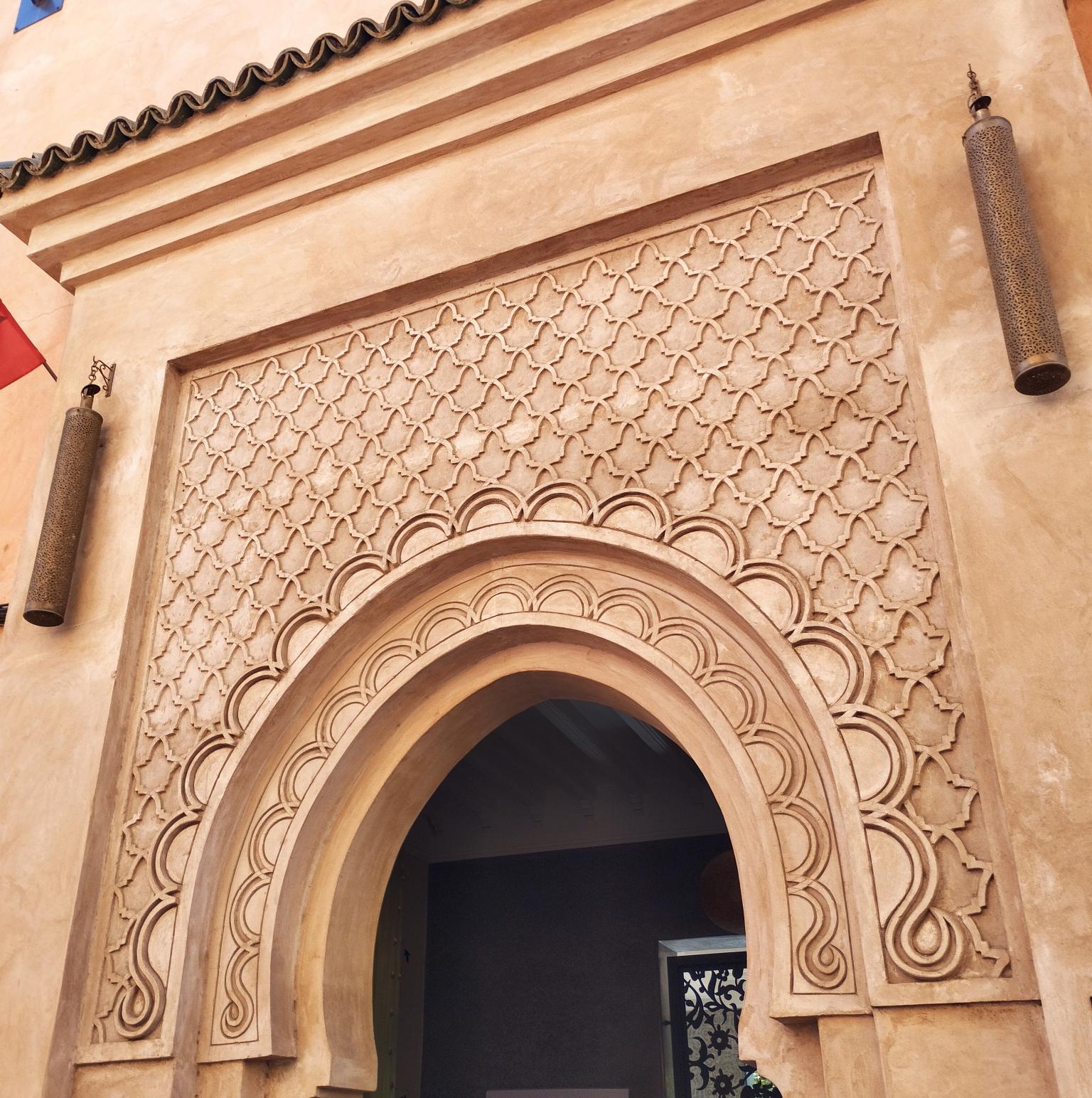
Medersa Ben Youssef is the finest piece of Islamic architecture in the city. This 14th-century Quranic school - restored and reopened to visitors - has a central courtyard of staggering geometric complexity: carved cedar wood, zellij tilework, and stucco so detailed it looks like lace. Entry is 50 MAD (~€5) for foreign adults. Go at opening time (9am) before the tour groups arrive. On my first trip I spent an hour here and barely noticed the time passing.
Bahia Palace is genuinely impressive if you approach it as a lesson in Moroccan court architecture rather than expecting Versailles. Built in the late 19th century for a grand vizier, it covers 8,000 square metres of interlocking rooms, painted ceilings, and courtyard gardens. Entry is 100 MAD (~€10). Guided tours of the palace are worth it - the building has no labels, so you will wander fairly blankly without context.
Saadian Tombs were sealed by Sultan Moulay Ismail in the 17th century and only rediscovered in 1917. The royal necropolis of the Saadian dynasty is compact but extraordinarily ornate - the Chamber of the Twelve Columns in particular is worth the entry price alone. Admission is 100 MAD (~€10). Queue early or late in the day; midday it backs up.
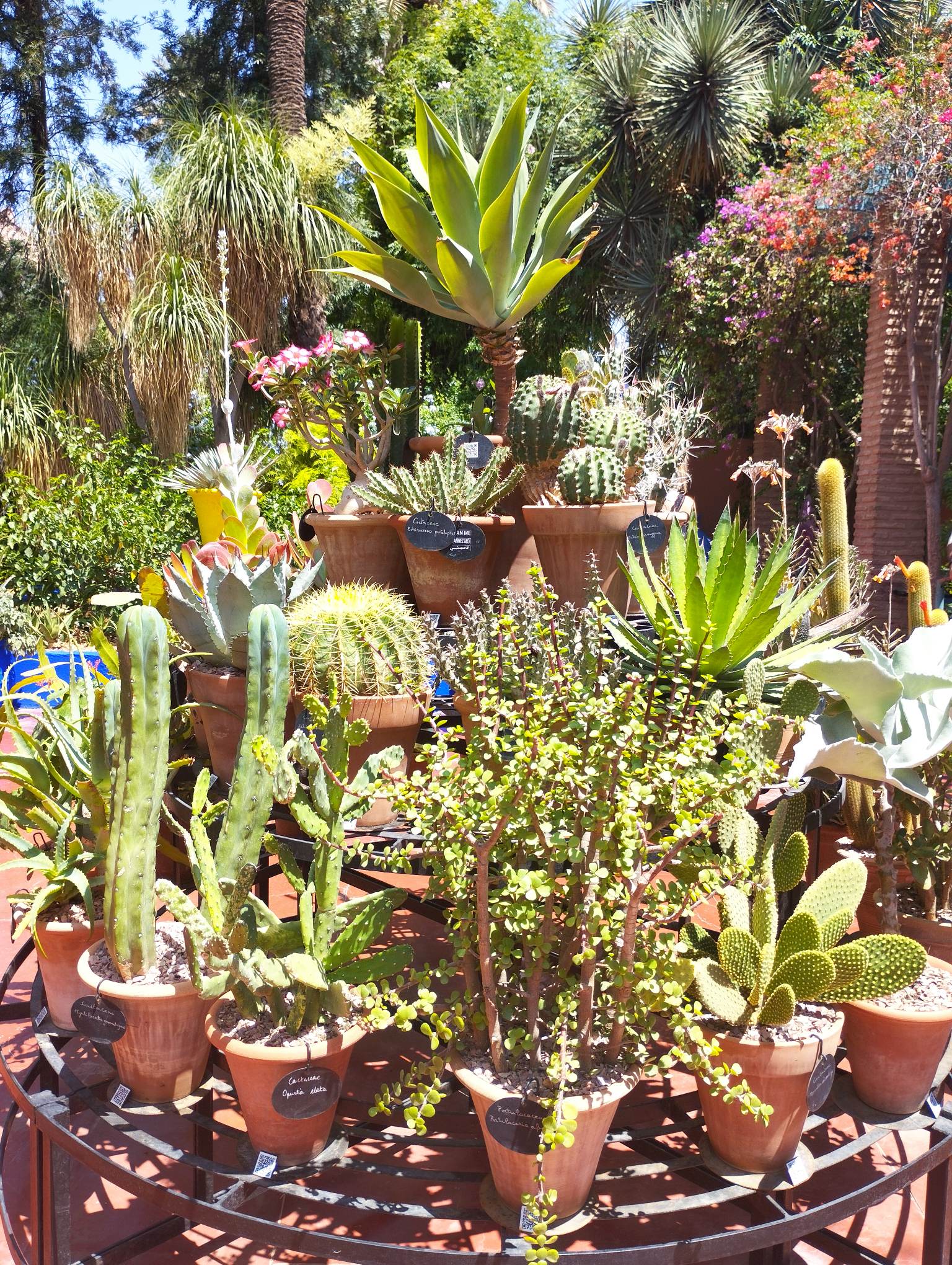
Jardin Majorelle is the blue garden purchased by Yves Saint Laurent and Pierre Bergé in 1980, which saved it from hotel development. The electric cobalt blue of the studio building against cacti and bamboo groves is as good as the photos suggest. Entry to the garden alone is 70 MAD. The YSL Museum next door adds another 100 MAD (or take a combined ticket for 150 MAD, roughly €15). Book online in advance - same-day tickets sell out in high season.
Le Jardin Secret sits inside the medina itself, on Rue Mouassine, and most tourists walk straight past it. This restored Islamic garden follows the traditional four-quadrant layout - two types of garden (exotic and Islamic) separated by a central pavilion, with a working khettara (underground irrigation channel) running beneath it. Entry is 100 MAD (~€10). It is smaller and quieter than Majorelle and feels less commercially packaged. The tower gives the best rooftop view of the northern medina you will find anywhere.
Jemaa el-Fnaa: Do Not Skip, But Go After 6pm
The central square by day is half-empty. After 6pm it transforms: snake charmers, gnawa musicians, storytellers, and food stalls assembling from nothing. The atmosphere is unlike anywhere else. Read the Jemaa el-Fnaa scams guide first - the monkey photo demand, unsolicited orange juice, henna applied without asking - all real, all easy to sidestep once you know them.
The Souks: Spectacular and Navigable
The souks north of Jemaa el-Fnaa are a working commercial city, not a tourist set. Districts specialise: leather, spices, textiles, lamps, ceramics. First day: walk through without buying, just look. Second day: shop, knowing that opening prices are typically three to four times what a merchant will accept. Tea from a shopkeeper is not an obligation to buy.
Skip or Temper Your Expectations
Tanneries in Marrakech: The Fes tanneries are legendary. Marrakech’s are smaller, less colourful, and embedded in a commission loop - the “route” to see them often passes through leather shops where you are expected to buy. If you want to see the tanning process, go early in the morning, find a rooftop viewpoint yourself, and do not follow strangers who offer to take you. Our Morocco scams guide covers this tactic in full. On balance, unless you are obsessed with leather production, skip them and see Fes’s tanneries if you go there instead.
El Badi Palace: Impressive in scale but largely ruins - once a palace of extraordinary wealth, stripped bare by Moulay Ismail in the 18th century. Worth 20 minutes if you are already in the southern medina near the Saadian Tombs, but not a destination on its own.
Museum of Moroccan Arts (Dar Si Said): Closed for extensive restoration as of mid-2026. Check current status before adding to your itinerary.
Where to Stay: Riad vs Hotel, Best Areas
See the detailed comparisons at riad vs hotel Marrakech and where to stay in Morocco, but here is the honest version:
Riads are traditional courtyard houses converted into guesthouses or small hotels. They look from the outside like blank walls in a narrow alley - the whole point is that the interior world is hidden. Inside: a central courtyard, often with a plunge pool or fountain, rooms arranged around it on two or three floors, and usually a rooftop terrace. The cost of a Marrakech riad spans an enormous range:
- Budget riads: 400-700 MAD (~€40-70) per room per night. Basic but often charming.
- Mid-range: 700-1,800 MAD (~€70-180). Good service, likely a pool, often excellent breakfasts included.
- Boutique luxury: 1,800-5,000 MAD (~€180-500). Full concierge service, stunning design, sometimes only 4-6 rooms.
Stay in the medina for at least two nights. The experience of walking out your riad door into the alleyways at 7am is specific to the medina and cannot be replicated from a hotel in Gueliz. That said, some people find the constant navigation and attention exhausting; for longer stays, mixing medina nights with a modern hotel in Gueliz gives a better balance. See our female-friendly riad recommendations if you are travelling as a woman.
For best medina areas: Mouassine and Bab Doukkala in the northwest of the medina are quieter and less touristy than the area immediately around Jemaa el-Fnaa. Closer to the square means convenient; further means more peaceful evenings.
Food: What to Eat and Where
Marrakech is an excellent food city if you eat where locals eat rather than at the first restaurant with an English menu and a man pulling you inside from the pavement.
The dishes worth seeking out: tagine (slow-cooked meat or vegetable stew), bastilla (a flaky pastry of pigeon or chicken with almonds and cinnamon - sounds odd, tastes remarkable), harira (tomato and lentil soup), and mechoui (slow-roasted lamb from specific spots in the souk). A bowl of harira from a Jemaa el-Fnaa stall costs 10-15 MAD. A proper sit-down lunch with tagine, bread, and mint tea: 80-150 MAD in a local restaurant, 250-400 MAD at a tourist-facing one. The food stalls in Jemaa el-Fnaa at night are not a scam - check prices before sitting and you will eat well for 60-100 MAD.
Hammams: What They Cost and What to Expect
A hammam is a steam bath followed by a full-body scrub using beldi (black) soap and a rough kessa mitt. It is not a tourist gimmick - locals use them regularly. Three tiers exist:
Local hammams (20-80 MAD): genuinely local, very cheap, minimal English, shared spaces. Worth it if you are confident.
Tourist and boutique hammams (150-450 MAD for hammam plus scrub): the practical sweet spot. Clean facilities, trained staff, an experience that still feels authentic. An optional massage adds 300-400 MAD. These are what most visitors should book.
Hotel and luxury spas (600-2,000 MAD): essentially a Western spa with Moroccan aesthetics. Impeccable, but the hammam experience is largely lost.
Ask your riad for recommendations rather than booking from a tout near the square.
Realistic Costs and Daily Budget
Marrakech is affordable by European standards but not as cheap as people expect given Morocco’s reputation. Prices in tourist areas have risen substantially since 2022.
Budget traveller (hostel dorm or basic riad, street food, public transport, self-guided sights): 400-600 MAD (~€40-60) per day.
Mid-range (private riad room, sit-down meals, taxis, one or two paid sights per day): 800-1,500 MAD (~€80-150) per day.
Comfortable/luxury (boutique riad, restaurant dining, private guides, spa): 2,000 MAD+ (~€200+) per day.
Sight entry fees add up: if you do Medersa Ben Youssef (50 MAD), Bahia Palace (100 MAD), Saadian Tombs (100 MAD), and Jardin Majorelle + YSL (150 MAD combined), you have spent 400 MAD (~€40) on admissions alone in one day.
There are plenty of free things to do in Marrakech - the souks themselves cost nothing to walk through, Jemaa el-Fnaa is free to enter, and several mosques and shrines have public access areas.
Safety and the Common Scams
Marrakech is safe. Violent crime against tourists is rare. What you will encounter is a sophisticated commission economy and various low-grade hustles, all of which are navigable once you know them. Our dedicated how to stay safe in Marrakech guide and the broader Morocco scams guide cover this thoroughly.
The five to know before you arrive:
Fake guide: Someone falls into step, “helps” you navigate, and expects payment. Decline clearly from the start - “thank you, I’m fine” - and do not engage further.
“It’s closed today” lie: Someone claims your intended sight is shut and offers an alternative. Almost never true. Check official hours before leaving your riad and proceed regardless.
Henna trap: A woman offers a small design, then covers your entire arm and demands 300 MAD+. Full explanation at the Marrakech henna scam guide. Simply do not hold your hand out.
Tannery commission loop: A stranger offers to take you to the tanneries and routes you through leather shops. Navigate there independently with maps.
Taxi overcharging: Always agree a price before getting in or insist on the meter. Medina to Gueliz should not exceed 35-40 MAD by day.
For solo female travellers, the medina is manageable but requires assertiveness. Covering shoulders and knees reduces unwanted attention significantly. Avoid walking alone in unlit alleys after 10pm - not because of serious danger, but because being approached repeatedly in the dark is genuinely unpleasant.
Day Trips You Can Do From Marrakech
Marrakech’s position makes it one of the best bases in Morocco for day trips. See Atlas Mountains day trips for detailed options or browse the tours page to find organised excursions.
Ourika Valley (60 km south) - the nearest escape into the High Atlas. A narrow valley with Berber villages, a river, and a waterfall at the end. 2 hours each way. Best done in a shared or private taxi rather than a tour, which allows more flexibility. Half-day is enough.
Ait Ben Haddou (200 km east via the Tizi n’Tichka pass) - the UNESCO-listed ksar that has appeared in Game of Thrones, Gladiator, and Lawrence of Arabia. It is a long day - 3 hours each way plus visiting time - but genuinely spectacular. Most organised tours also stop at Ouarzazate (Morocco’s “film city”). Group tours from Marrakech: 150-300 MAD per person. Private: considerably more. If you are thinking of doing this AND the Sahara, consider instead doing both on a multi-day tour from our tours page rather than cramming Ait Ben Haddou into a day trip.
Essaouira (180 km west) - the Atlantic coast walled city. Cooler, windier, different in feel entirely - a Jimi Hendrix pilgrimage destination in the 1960s with a strong fishing and argan-oil economy. The drive takes about 2.5 hours. A full day feels rushed; it makes more sense as an overnight stop. See our Essaouira guide.
High Atlas hiking - day hikes from villages above Imlil (90 minutes away) are excellent and accessible year-round. Jebel Toubkal, the highest peak in North Africa at 4,167 m, requires at least two days and a guide.
Agadir (250 km south) - skip it as a day trip. The drive eats the day. Go only if you are heading south anyway.
How Many Days You Need
Three nights minimum to do Marrakech without feeling rushed. Two days is the number that most people regret.
- Day 1: Jemaa el-Fnaa in the evening, get oriented, walk the northern souks without a plan.
- Day 2: Medersa Ben Youssef, Le Jardin Secret, Bahia Palace, Saadian Tombs (a genuinely full day if you do all four).
- Day 3: Jardin Majorelle and YSL Museum in the morning (book ahead), hammam in the afternoon, medina dinner.
A fourth or fifth day justifies a day trip. For a comparison of what Marrakech offers versus spending more time in the north, read Marrakech vs Fes and the Fes travel guide.
Sample 3-Day Plan
Day 1: Check in. Walk to Jemaa el-Fnaa via a different route each direction to start learning the medina. Eat at the square stalls and return after dark for the performances.
Day 2: Medersa Ben Youssef at 9am. Walk south through the souks - observe, do not buy yet. Bahia Palace around noon. Saadian Tombs after lunch (route via the mellah, the old Jewish quarter). Rooftop drinks at sunset.
Day 3: Jardin Majorelle at opening time (tickets pre-booked). Lunch in Gueliz. Le Jardin Secret in the afternoon. Hammam booked for 5pm. Final medina dinner.
Frequently Asked Questions
Is Marrakech safe for solo female travellers?
Yes, with realistic expectations. You will be approached, stared at, and occasionally followed for short stretches. The behaviour is attention-seeking rather than threatening in the overwhelming majority of cases. Dressing to cover shoulders and knees significantly reduces this. The medina by day is fine; after 10pm, take a taxi rather than walking dark alleys alone. Read the solo female Marrakech guide for specific neighbourhood and accommodation advice.
Do I need to book sights in advance?
Jardin Majorelle is the one that most commonly sells out in peak season (March-May, September-November) - book online a day or two ahead at minimum. The other main sights (Medersa Ben Youssef, Bahia Palace, Saadian Tombs) can generally be visited on the day, though expect queues at the Saadian Tombs between 10am and 3pm. If you are visiting during the July-August heat peak, you will have more breathing room - high temperatures thin the crowds significantly.
What is the best time of year to visit Marrakech?
March to May and September to November give the best weather - warm days (22-28°C), cool evenings, and manageable crowds. June, July, and August are genuinely brutal - temperatures regularly exceed 40°C in July and August and the medina becomes an ordeal during the middle of the day. December to February is mild and quiet with occasional cold nights - a good time for those who want fewer people and lower prices. Ramadan timings shift each year; visiting during Ramadan is interesting and not difficult, but expect reduced hours at restaurants, more atmospheric evenings, and some sight closures.
Can I visit Marrakech on a budget of under €50 a day?
Yes, if you are flexible. A bed in a budget riad or guesthouse runs from 250-400 MAD per night. Street food and cheap local restaurants will get you fed for 150-200 MAD per day. Seeing two or three sights adds 150-200 MAD in entry fees. Using Bus 19 from the airport and walking everywhere within the medina keeps transport costs near zero. The main budget-buster is shopping and hammam add-ons. For a fuller breakdown, see free things to do in Marrakech.
How does Marrakech compare to Fes for a first trip to Morocco?
They serve different interests. Marrakech is more internationally connected, has better infrastructure for tourists, and is the right base for Atlas and desert day trips. Fes is harder to navigate, has a larger and more complex medina, and is less tourist-polished in a way some people find more authentic. The tanneries at Fes are significantly more impressive than Marrakech’s. If you only have time for one, Marrakech is the easier entry point; if you want both, read the Marrakech vs Fes comparison and the Fes travel guide to plan your route.
Ready to Book?
Browse curated Morocco tours from verified operators, filtered by interest and budget.
Find Your Perfect Tour