Last updated: June 2026
If you’ve ever been handed a cup of mint tea by a stranger in a mountain village and wondered whether this is a genuine welcome or the opening act of a hard sell - you’re asking the right question. Village visits in the High Atlas can be some of the most meaningful moments of a Morocco trip, or they can feel awkward and transactional. The difference usually comes down to how you arrive, what you expect, and who you go with.
After six trips to Morocco since 2017, I’ve done the rushed day-trip village stop and the slow overnight homestay. I’ve been to cooperatives set up for bus groups and ones where the women barely looked up from their work. Here’s what I’ve actually learned.
A Note on the Word “Berber”
Before we go any further: the people of the High Atlas call themselves Amazigh (singular) or Imazighen (plural). Their language is Tamazight (or one of its regional varieties - Tashelhit in the south, Central Atlas Tamazight in the mountains). The word “Berber” comes from the Greek and Roman word for outsider - the same root as “barbarian” - and while it’s still used widely in travel writing and by Moroccans themselves, many Amazigh people prefer their own name.
I’ll use both terms in this post because that reflects how Moroccans actually speak - you’ll hear “Berber” constantly in Marrakech from guides and guesthouse owners. But when you’re speaking to or about the people themselves, Amazigh is the more respectful choice, and it’s worth knowing.
Tamazight was recognised as an official language of Morocco in the 2011 constitution, alongside Arabic - a significant step after decades of marginalisation under Arabisation policies. That political history is worth understanding before you visit.
What a Village Visit Actually Looks Like
The “village visit” is one of the most marketed experiences in the Atlas, and also one of the most variable. Here’s what you can realistically expect depending on the format.
Day-trip stop (1-2 hours): You arrive by minibus or 4x4, walk through a village with a guide, may be invited into one house for tea, and leave. These can be pleasant but thin. You won’t have much time, conversations are often mediated through a guide translating at pace, and there’s usually a craft shop or argan cooperative built into the schedule. You see the surface.
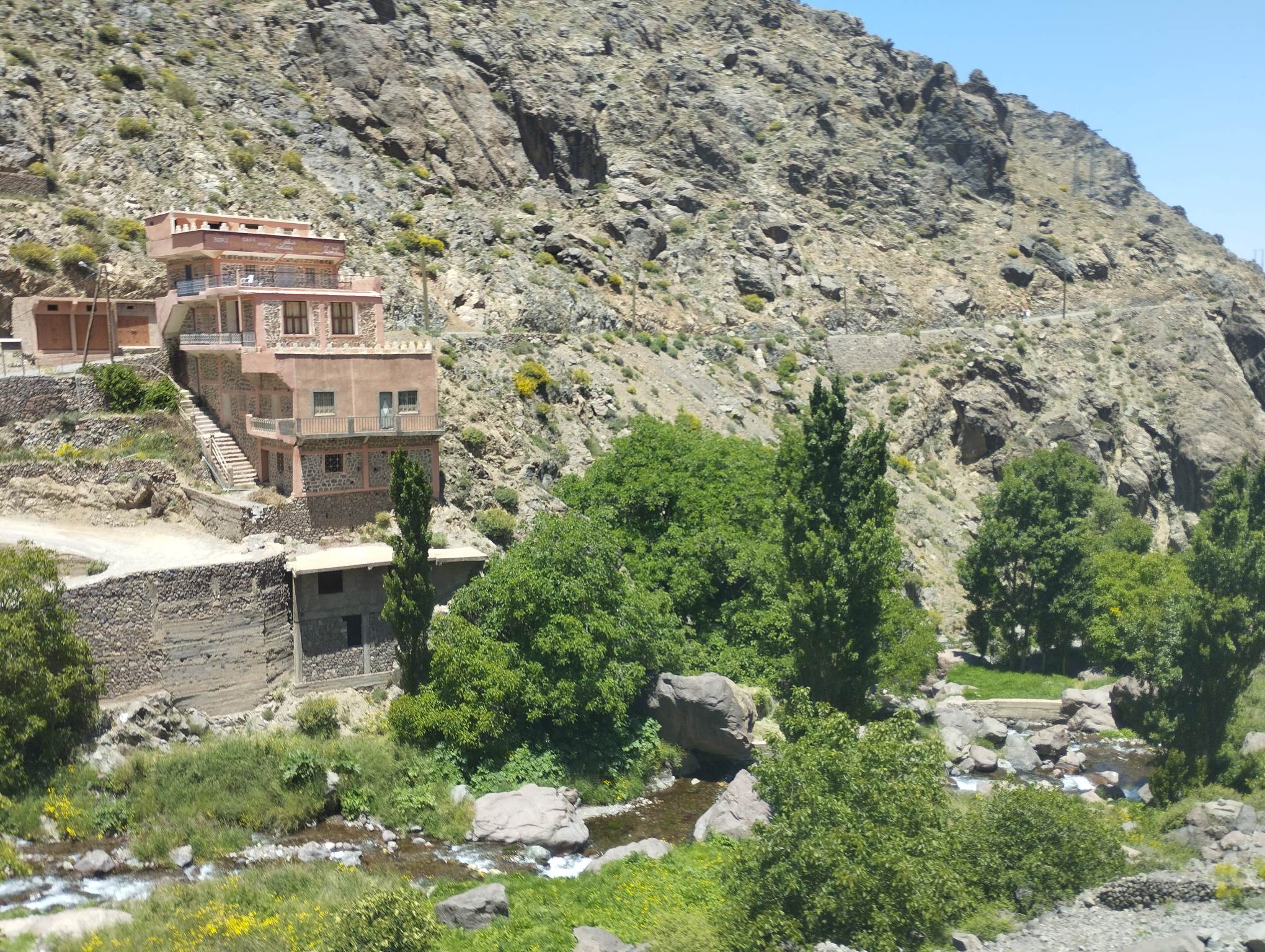
Guided walk through villages (half-day): Much better. Walking between villages in the Ourika Valley or around Imlil gives you time to stop, photograph (with permission), sit, and actually watch daily life - women working terraced fields, mules on the paths, kids coming home from school. You’re not a spectacle, you’re just a slower-moving presence. See our Ourika Valley guide and the Imlil and Toubkal day-trip guide for route specifics.
Lunch in a family home: This is where it gets interesting. Some of these are genuinely family homes where the family cooks for visitors a few times a week as a small income stream. Others are effectively small restaurants operating under that description. The food is usually good either way - tagine, harira, msemen flatbread, mint tea. The question is whether you feel like a guest or a customer. Honest answer: often somewhere in between.
Homestay overnight: The slowest and often the most rewarding format. Staying in a gite d’etape (a simple mountain guesthouse, usually family-run) in a village like Aït Bouguemez or one of the Imlil side valleys means you’re there for the evening, the morning, the light changing on the mountains. Costs typically run 15-40 euros per night including dinner and breakfast. You’ll eat what the family eats, sleep in a basic room with heavy blankets, and probably have some version of a conversation that crosses three languages.
The Genuine vs. the Staged
Let me be direct: some of what’s sold as an “authentic Berber experience” is a performance calibrated for tourists. That doesn’t make it worthless - but it’s useful to know what you’re looking at.
Signs it’s probably genuine:
- The house looks lived-in, not styled for photos
- Children are doing homework or playing, not performing
- The cook is cooking for the family too, not just for you
- Your guide has an actual connection to the family - has known them for years, uses their names, knows their kids
- There’s no shop at the end
Signs it’s more tourist-oriented:
- It’s on the circuit of every tour from Marrakech
- There’s a printed menu, or laminated photos of dishes
- You’re shown a carpet room or gift shop before you leave
- The “family member” starts asking where you’re from and whether you’d like to buy something within the first five minutes
Neither is inherently dishonest - tourism IS part of how these communities survive, and there’s nothing shameful about that. But knowing the difference helps you calibrate your expectations and your responses.
For genuinely off-the-circuit experiences, Aït Bouguemez (the “Happy Valley”) sits about 180km from Marrakech in Azilal Province and receives a fraction of the visitor numbers that Imlil and Ourika do. The valley sits at around 1,800 metres and the farming communities here - growing wheat, barley, potatoes and orchard fruit using traditional irrigation channels - have a much lower exposure to package tourism. If you want something that genuinely feels unscripted, this is where to look.
Browse our High Atlas tours for options that include this valley.
The Argan Cooperative Reality
You will almost certainly be taken to an argan oil cooperative on any Atlas day trip from Marrakech. These are worth visiting - but it helps to go in with clear eyes.
The women’s argan cooperative model was genuinely transformative for Amazigh women in the Souss-Massa and Atlas regions, providing income, legal status and a degree of economic independence. Legitimate cooperatives pay women fair wages, have proper governance structures, and sell oil that’s traceable.
However, the cooperative label has been heavily exploited. As Equal Times has reported, up to nine out of eighteen UCFA member cooperatives had closed by 2024, undercut by larger commercial operations. The roadside “cooperative” that every tour bus stops at - with perfect displays, English-speaking salespeople and price lists on the wall - is often more accurately described as a retail shop that has adopted the branding. The women cracking argan kernels at the entrance are real; the cooperative structure behind the scenes may not be.
How to tell the difference: Legitimate cooperatives typically have official certification, a list of member women displayed, and prices that reflect the actual cost of production (genuine cold-pressed argan oil for culinary use costs roughly 50 euros per litre - significantly more than the bottles sold in tourist shops). If you want to buy, ask whether the cooperative is certified by UCFA (Union of Cooperatives of Women Argan Oil Producers) or has fair-trade certification.
Alternatively, buying from one of the smaller cooperatives that visitors access via responsible tour operators - where the guide has an established relationship - is a more reliable route to your money actually reaching the women doing the work.
Visiting Responsibly - Practical Specifics
This isn’t a lecture. Most of it is common sense, but some of it is specific to the Atlas.
Photography: Always ask, and accept no gracefully. In villages that see fewer tourists, people are generally more relaxed about being photographed. In the busy spots near Ourika or Imlil, people have been photographed without permission for so long that some are genuinely fed up with it. A smile and a gesture toward your camera is usually enough to ask. Don’t photograph women who haven’t indicated they’re fine with it.
Dress: Conservative is right for village visits. Shoulders and knees covered for both men and women. This isn’t about offending anyone - it’s just respectful, and in practice you’ll be treated differently (better) when you’re not visibly a beach tourist who got lost.
Children and gifts: Don’t give sweets, pens, money or gifts directly to children. It creates a dynamic that communities - and responsible travel organisations - consistently say is harmful. If you want to contribute something useful, give to the guides or guesthouse owners and let them manage it.
Money directly to the host family: If you’re having lunch at a family home and you want to pay a fair amount, ask your guide what’s appropriate rather than handing over whatever you think is generous. Over-tipping in one house skews expectations for other visitors.
What to pay: A village lunch typically costs 100-200 MAD (roughly 9-18 euros) per person. A gite d’etape with dinner and breakfast is usually 200-400 MAD per person. Guides for Atlas walks should be paid at least 400-600 MAD per day - more for multi-day treks. These rates support local families directly.
For the broader cultural context that makes these visits make more sense, our Morocco food and culture guide covers the detail that would take too long here.
The Three Valleys Worth Knowing
If you’re arriving from Marrakech and haven’t read our Marrakech travel guide yet, it covers the logistics of getting to the Atlas from the city.
Ourika Valley: Closest to Marrakech (about 60km), most visited. Beautiful - a river valley with traditional villages, terraced farms and the Setti Fatma waterfalls at the top. Also the most commercialised. Good for a first Atlas experience but expect company. See the full Ourika Valley guide.
Imlil and the Toubkal area: The main base for Toubkal trekkers, with a proper village infrastructure - guesthouses, guides, restaurants. More serious hiking territory. The surrounding valleys and satellite villages (Aremd is a short walk from Imlil and gets far fewer visitors) are excellent. Our Imlil and Toubkal guide covers the practicalities.
Aït Bouguemez (Happy Valley): The furthest and the most rewarding for anyone wanting something closer to daily Amazigh life without the tourist overlay. Multi-day treks to M’Goun (3,444m, Morocco’s second highest peak) start here. The villages in the valley proper - Agouti, Tabant, Aït Ali - are working farming communities, not tourism villages. Getting here requires either your own transport or a tour that’s specifically planned for it - it’s not on the standard day-trip circuit.
If you’re building an Atlas itinerary around any of these, the Atlas Mountains day trips guide is the right starting point.
A Note on Guides
A good local guide changes everything - not because you can’t navigate the valleys alone, but because a guide with real roots in a community opens doors that no amount of independent showing-up will produce. The guide who’s known a family for fifteen years, who knows which days the village market runs - that person is the experience.
Ask tour operators how their guides are connected to the villages you’re visiting. Guides from Marrakech who don’t speak Tashelhit will not give you the same access. Our Atlas tours use guides from the communities themselves.
Frequently Asked Questions
Is it appropriate to visit Amazigh villages as a tourist?
Yes, when done thoughtfully. Many Atlas communities welcome visitors because tourism supports livelihoods where farming alone is increasingly precarious. The key is visiting through operators with genuine community relationships, paying fair prices, and being a respectful guest rather than a consumer of cultural performance.
Should I say Berber or Amazigh?
Both are used in Morocco and you’ll hear both. Amazigh is the term the people use for themselves, and using it shows awareness and respect. Berber remains common internationally and among Moroccans themselves - using it isn’t offensive. When you’re speaking directly about or to Amazigh people, Amazigh is the better choice.
What does an argan oil cooperative visit actually involve?
You’ll typically see women demonstrating the traditional process of cracking argan kernels by hand and grinding the paste - a labour-intensive process that produces very small quantities of oil. The demonstration is usually genuine; the retail operation around it varies. If buying, look for cold-pressed culinary argan oil with certification, and expect to pay a realistic price for something made by hand.
How far in advance do I need to book a High Atlas homestay?
For the popular areas like Imlil and Ourika, a week’s notice is usually fine outside peak season. For Aït Bouguemez, which has limited accommodation, book 2-4 weeks ahead in spring and autumn. Multi-day treks anywhere in the High Atlas should be arranged further in advance, both to secure guides and because permits may be required for certain peaks.
Is the High Atlas safe for solo travellers?
Generally yes. The Atlas villages are not areas of political tension, and the culture is hospitable. The main practical concerns are the same as any mountain environment - weather can change quickly, and trails are not always well-marked. Going with a guide on your first Atlas trip is worthwhile for navigation reasons as much as cultural ones. Solo female travellers report that conservative dress and a confident manner handle most of the attention they receive.
What’s the best time of year to visit High Atlas villages?
Spring (April to June) is the strongest choice - green valleys, comfortable temperatures, snow mostly cleared from lower passes. Autumn (September to November) is also excellent. July and August can be hot at lower elevations, though altitude keeps the mountains cooler. January and February can be spectacular but trails may be snow-covered and some guesthouses close.
Ready to Book?
Browse curated Morocco tours from verified operators, filtered by interest and budget.
Find Your Perfect Tour