Last updated: June 2026
The 3-day Marrakech to Merzouga tour is the most popular desert trip in Morocco. It is also, if nobody warns you, one of the most exhausting things you can do with your holiday. Here is what you are actually signing up for.
I have done this route twice - once in a shared minibus in my early Morocco days, once in a private 4x4 with two friends. Both were worth it. The Erg Chebbi dunes at sunset are genuinely extraordinary and the drive through the Atlas and the gorges is spectacular. But the distances are not small, the driving days are long, and the experience varies enormously depending on who you are travelling with and what kind of camp you book. So let me break it down properly.
The Route: What You Actually Drive Through
The full circuit from Marrakech to Merzouga and back covers roughly 1,000 kilometres over three days. That is not a misprint. Here is what the route looks like day by day.
Day 1 - Marrakech to Dades Valley (~7-8 hours driving)
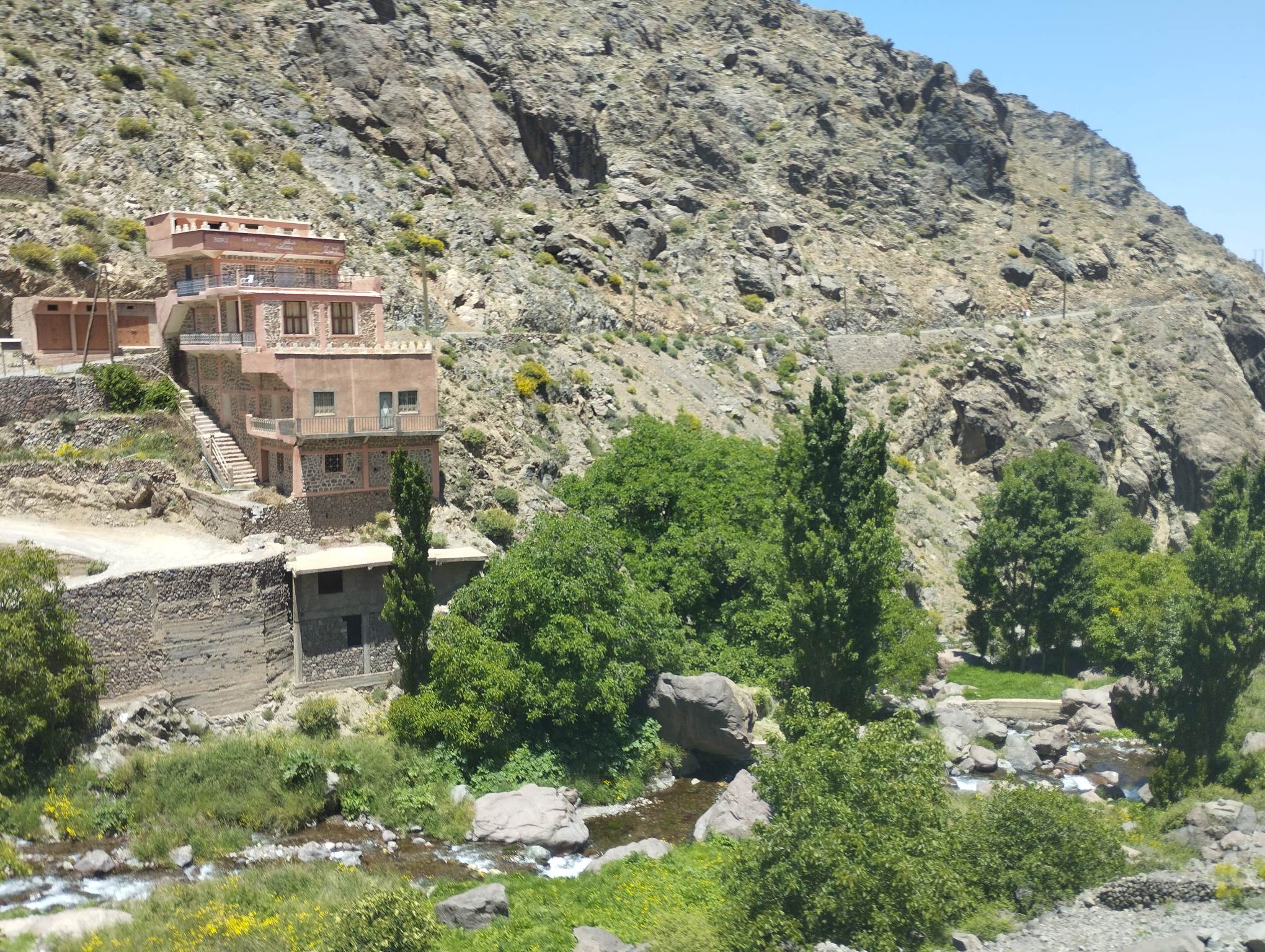
You leave Marrakech early - typically 7am or 8am - and head south through the High Atlas Mountains via the Tizi n’Tichka pass. The pass sits at 2,260 metres and, on a clear morning, the views across the ridgelines are some of the best you will get in Morocco without actually hiking. The road is paved and well-maintained, though it winds steeply and coaches take it slowly.
From the pass you drop down toward Ouarzazate, stopping at Ait Ben Haddou - the UNESCO-listed ksar that has stood in for ancient cities in dozens of films. You get an hour or two here, which is enough for the main walk up through the kasbah if you keep moving. After lunch in or near Ouarzazate, the route continues east into the Rose Valley and the Dades Gorge, where you stop overnight in a guesthouse or small hotel.
Dades Gorge itself is striking - red-rock cliffs carved by the river, with narrow sections that genuinely look other-worldly. Most tours stop here briefly the following morning before pushing on, so if you want to walk it properly, a private tour gives you more flexibility.
Day 2 - Dades Valley to Merzouga (~6-7 hours driving)
You head east via the Todra Gorge, another limestone canyon that is narrower and more dramatic than Dades. The walls close in to about 10 metres apart in places, with the gorge running to about 300 metres high. Most tours stop here for 30 to 45 minutes. It is short but the sight is worth it.
From Todra you drive further east across the Ziz Valley and the date palm oases toward Merzouga, which sits at the foot of the Erg Chebbi dunes. You arrive in late afternoon, stow your bags at a guesthouse, and then mount a camel for the hour-long trek into the dunes to reach your desert camp for sunset. The camel ride takes roughly 60 to 90 minutes each way. You spend the night in the camp.
Day 3 - Merzouga back to Marrakech (~9-10 hours driving)
This is where people get a shock. After breakfast at camp and a sunrise over the dunes, you get back on the camel, return to Merzouga, and then spend the entire day driving back to Marrakech. Most tours take a different route through Erfoud and Rissani, past fossil-rich rock formations, but the drive is long regardless. You arrive back in Marrakech somewhere between 8pm and 10pm.
That return day is genuinely hard going. The drive is beautiful in stretches but the fatigue is real. If you have a flight the next morning, factor in that you will be arriving back late and tired.
For full context on the Sahara desert tours and route options available in Morocco, our guide covers the wider picture beyond just this route.
Shared vs Private: Which Should You Book?
Shared group tours put you in a minibus of 8 to 17 passengers on a fixed itinerary. The price is the draw: shared tours run €85 to €160 per person for 2025-2026, with budget operators advertising as low as €65 for large groups in basic accommodation. The trade-off is that you are on the group’s schedule throughout - if you want extra time at Todra Gorge, you do not get it.
Private tours give you your own vehicle, driver/guide, and the flexibility to adjust stops. For two people, private tours cost around €200 to €260 per person; for a group of four, closer to €150 to €180. These prices cover transport, accommodation, and breakfast and dinner, but not lunches, optional activities, or tips.
Private is worth it if you have three or more people to split costs, want to move at your own pace, or are travelling with children. Solo or couples on a budget will find shared perfectly workable - just check operator reviews carefully before booking.
Browse the Sahara tour options on Explora Morocco to compare across price points.
Desert Camp Tiers: What the Labels Actually Mean
Most tour operators advertise three tiers of desert camp, though they use different names. Here is roughly what each means in practice:
Standard camp: A fixed haima (traditional tent) with shared bathroom facilities. Mattresses on the floor with blankets. A communal dining tent for dinner and breakfast. Adequate, basic, often more atmospheric than you expect because the setting does all the work. If you are staying in a standard camp, manage your expectations around bathrooms in particular - you may be sharing facilities with 30 other people.
Mid-range / superior camp: Private tents or slightly larger haimas, often with simple beds rather than floor mattresses, and separate bathroom blocks that are cleaner and better maintained. Dinner is typically a tagine or couscous served in a shared space. This is the most common tier included in mid-price tours. Many people find it perfectly comfortable.
Luxury camp: Private ensuite tents with hot showers, electricity, and often air conditioning. Some camps have pools. Expect to pay €100 to €180 per person per night for the camp alone. One catch: the best dune positions are often held by older, simpler camps - luxury options can sit slightly further back.
One honest note: no camp eliminates the reality of sleeping in the Sahara. Sand gets into everything, and toilet facilities at mid-tier camps are not hotel standard. Luxury mitigates this, but does not erase it.
For a longer comparison of Erg Chebbi versus Erg Chigaga - the two main dune systems in Morocco - we have a dedicated post if you are weighing up the options.
What It Costs: A Realistic Breakdown
Shared group tour (per person, 2025-2026 prices):
- Budget operator, standard camp: €65 - €90
- Mid-range operator, superior camp: €120 - €160
- Higher-end shared with upgraded camp: €180 - €220
Private tour (per person, for a group of 2):
- Standard hotels + standard camp: €200 - €250
- Superior accommodation throughout: €280 - €380
- Luxury throughout (including upscale camp): €400+
Prices usually include transport, accommodation, camel trek, and breakfast and dinner at each stop. Lunches, entry fees (Ait Ben Haddou charges around 10 dirhams/£0.80 per person), tips, and optional activities like sandboarding or quad bikes are almost always extra.
Tips are expected and appropriate - a shared tour guide typically receives €5-10 per person for the trip, camel handlers €5-10 per rider. Budget for this separately.
See the atlas mountains and day trip guides for context on how this compares with shorter excursions from Marrakech.
What to Pack
Summer (June to August) in the Sahara means temperatures above 40°C. Winter nights at Erg Chebbi can drop below freezing. The shoulder seasons (March to May, September to November) are the most comfortable.
Bring regardless of season:
- A headscarf or buff for sand and sun
- High-SPF sunscreen and proper UV sunglasses
- A warm layer - desert nights cool fast even in summer
- Shoes you do not mind filling with sand; flip-flops for camp
- A small torch (standard camps have limited electricity)
- Cash in dirhams for tips, lunches, and entry fees
- A power bank for phone charging
Wear long trousers for the camel ride to avoid chafing. If you have lower back issues, request a 4x4 transfer into camp - most operators offer this at no extra cost.
Honest Verdict: Is It Worth It?
Yes, with conditions.
The Erg Chebbi dunes are among the most dramatic landscapes in North Africa. The drive through the Atlas and the gorges is genuinely beautiful. If Morocco is on your list and you have three days to spare from Marrakech, this is the trip to do.
But go in clear-eyed about the driving. This is not a relaxing holiday - it is a scenic endurance event. The third day in particular, when you drive nine to ten hours back to Marrakech, is a slog. If you have only a few days in Morocco and you are already tired from travelling, consider whether you have the energy for it.
How does it compare to Agafay?
The Agafay Desert - the rocky plateau 40km outside Marrakech - is often marketed as a “desert experience” and it is a convenient day trip or overnight stay. But Agafay is not the Sahara. It is a lunar landscape of grey gravel, not golden sand dunes. Sunset there is atmospheric; Erg Chebbi is genuinely awe-inspiring. If you have the time, they are not competing options - they serve different purposes. If you have to choose, go to the Sahara.
What about flying?
Royal Air Maroc flies Marrakech to Errachidia (the nearest airport to Merzouga) for roughly €60-120 one way, cutting travel time to under an hour plus a 90-minute road transfer. You lose the entire overland route - no Atlas, no Ait Ben Haddou, no gorges - but you gain more time at the dunes. For anyone short on days, it is a legitimate option.
For a full assessment, see whether the Morocco Sahara tour is worth it. And our Morocco itineraries guide covers how this trip fits into longer visits.
Frequently Asked Questions
How long is the drive from Marrakech to Merzouga?
Merzouga is approximately 560 km from Marrakech by road. With stops at Ait Ben Haddou and the Dades Gorge, the first day of driving typically takes 7 to 8 hours. The return journey on day three, often via a slightly different route, takes 9 to 10 hours. The total distance for the full round trip is close to 1,100 km.
Can I do the Marrakech to Merzouga tour in 2 days instead of 3?
Two-day tours exist but they are brutal. Day one is roughly 10 hours driving with stops to Merzouga. Day two drives straight back. Most people who have done both say the 3-day version is meaningfully better - the extra day gives you a real morning in the dunes and makes the return less punishing.
What is the best time of year for the Marrakech to Merzouga tour?
March to May and September to November are the most comfortable months. Spring brings wildflowers in the Atlas and moderate temperatures at the dunes. Autumn has clear skies and the heat is easing. Summer (June to August) is very hot - daytime temperatures in Merzouga routinely exceed 40°C - and the experience at camp is uncomfortable without air-conditioned accommodation. Winter is cold, particularly at altitude and at night in the desert, but the light in the Atlas is exceptional and the dunes are much less crowded.
Is the camel trek to the desert camp compulsory?
No. Almost every operator offers a 4x4 transfer into the camp as an alternative to the camel ride. The transfer takes 15 to 20 minutes versus 60 to 90 minutes on a camel, and is available at no additional charge with most operators when requested in advance. People with back problems, limited mobility, or small children often find it the better option. The camel ride is memorable but it is not particularly comfortable and the photos of it are broadly the same after the first 10 minutes.
What is the difference between a shared and private Sahara tour?
A shared tour puts you in a minibus of 8 to 17 people following a fixed itinerary. A private tour gives you your own vehicle, driver and guide, and the ability to adjust stops and timing as you go. Shared tours cost roughly €85 to €160 per person. Private tours for two people cost €200 to €260 per person; the per-person cost drops if you are a group of three or four. If you are a solo traveller, a shared tour is usually the most practical option unless you are willing to pay for a private vehicle alone.
Do I need any vaccinations or special preparation for the desert?
No specific vaccinations are required for Morocco. Bring more water than you think you need - dehydration catches people out, especially in summer. Pack blister plasters (the camel saddle chafes inner ankles) and basic antidiarrhoeal tablets. Travel insurance that includes medical evacuation is strongly recommended; the Sahara is remote and the nearest hospitals are in Errachidia or Ouarzazate.
Ready to Book?
Browse curated Morocco tours from verified operators, filtered by interest and budget.
Find Your Perfect Tour