Last updated: June 2026
Marrakech has extraordinary food and plenty of terrible meals. The gap between the two is usually the gap between eating where tourists go and eating where Moroccans go - and that gap often runs to 200 or 300 per cent on your bill.
After six trips since 2017, I’ve eaten at the tourist-facing rooftop restaurants (mixed results, great sunsets), in riads that felt genuinely special, at Jemaa el-Fnaa stalls late at night, and in Gueliz spots where I was the only foreigner in the room. Here is what I actually think, without the sponsorships or the diplomatic hedging.
For more context on Moroccan food culture before you arrive, the Morocco food and culture guide is worth reading in advance.
Jemaa el-Fnaa: What the Food Stalls Are Actually Like
The food stalls that fill the square after dark are a genuine Marrakech experience. They are also an exercise in managing expectations.
Every stall displays roughly the same things: grilled meats, kefta, merguez, snails, sheep’s heads, and some kind of mixed plate. The food quality is broadly similar across stalls. What changes is the price and how aggressively you get approached.
The approach problem: Touts will grab your arm, thrust laminated menus at you, and sometimes physically steer you toward their stall. The ones doing this hardest are not where you want to eat. The stalls with a steady queue of locals and families sitting down without fuss are the better indicator. Once you sit, check the price before ordering - ask clearly and confirm before food appears.
Prices at the stalls run 80-150 MAD for a mixed plate of grilled meats with bread. That is tourist pricing - the same food two streets into the medina costs 40-60 MAD. You are partly paying for the theatre of the square, which is real and worth something. But do not order a full spread across multiple stalls without knowing what everything costs first.
What is actually worth ordering here:
- Snails (babouch) - a small bowl from one of the dedicated snail carts, usually 20-25 MAD. The broth is spiced and warming. This is a genuine Marrakech thing and not a tourist invention.
- Fresh orange juice - 5 MAD per glass from the juice stalls at the edge of the square. Non-negotiable value. Squeeze it in front of you.
- Harira - the thick lentil and tomato soup, best from a small pot rather than a full restaurant setup. Around 10-15 MAD.
Avoid ordering the whole-grilled fish displays unless you are very confident about what you agreed to pay. Fish pricing at these stalls has a reputation for creative bill generation.
The Jemaa el-Fnaa scams guide covers the specific bill tricks in detail - read it before you sit down.
Rooftop Restaurants: Honest View vs Food Assessment
Every rooftop in Marrakech sells you a view. Some of them also sell you decent food. Most of them are relying on the view to carry the meal.
The basic rule is this: the rooftop facing directly onto Jemaa el-Fnaa or the Koutoubia is almost certainly prioritising location over cooking. Café de France is the standard warning here - the terrace view is genuinely good, the food is expensive for what it is, and the bill has a way of being higher than you expected.
That said, a few rooftops do both things reasonably well.
Rooftops in the medina tend to serve traditional Moroccan menus - tagines, couscous, pastilla. Quality varies significantly. On my last two visits, I made a point of treating rooftops as drinks-and-sunset spots and eating the actual meal elsewhere. A mint tea or an avocado smoothie on a good terrace while the light drops over the city is genuinely one of the better things you can do in Marrakech - just do not expect the kitchen to match the view.
Rooftops in Gueliz (the new town) are a different proposition. The newer ones - MO-MO and a few others that opened in 2024-25 - serve contemporary food that would stand up anywhere. The views are city-skyline rather than medina rooftop, but the cooking is more consistent. If you want a rooftop dinner that is actually about the food, Gueliz is the better bet.
Reservation tip: The best rooftops in Marrakech fill up during October to April. Book ahead if you have a specific place in mind. Arriving 30 minutes before sunset and staying for dinner is the sensible approach.
Riad Dining: When It Is Worth the Price
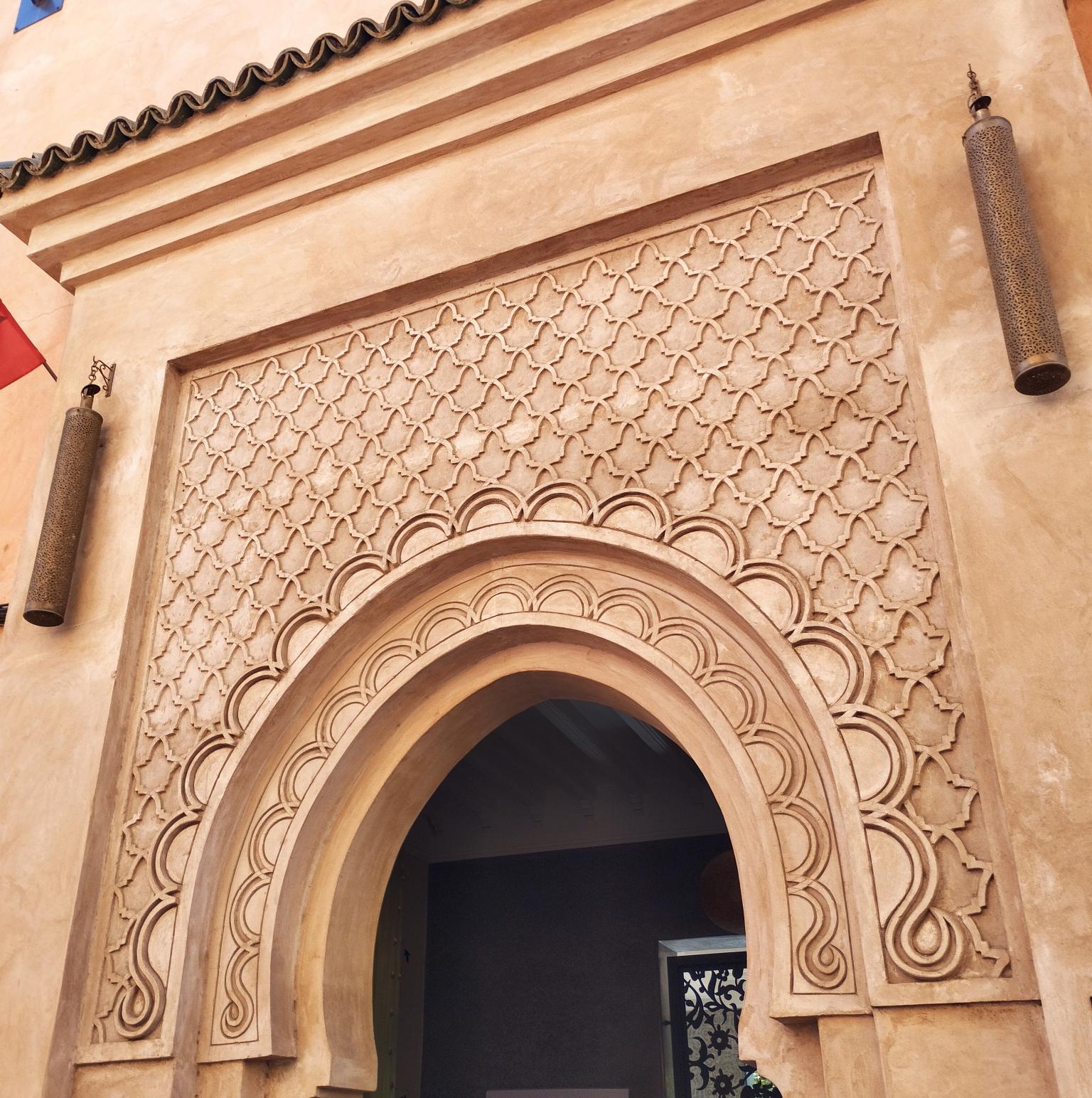
Eating in a riad courtyard - the carved plasterwork, the open sky above, the fountain - is one of the most atmospheric dining experiences in Morocco. It is also the most variable in terms of food quality.
Some riads serve excellent Moroccan cooking in a setting that justifies the higher price. Others serve middling food in a beautiful room and rely on the setting to cover for it. The riads that have been cooking the same dishes for years do them better than recently converted boutique hotels that added a restaurant as an afterthought.
A riad dinner typically runs 300-500 MAD per person. That is more than a medina restaurant but less than the high-end tourist restaurants near the Mamounia. Booking in advance is essential - these are small operations. If your riad offers dinner, try it at least once.
The Medina Away from the Square: Where Locals Actually Eat Lunch
The best value eating in Marrakech is in the medina streets away from Jemaa el-Fnaa - and the further you walk, the lower the prices go.
What to look for: Small cafés with no English signage, plastic chairs, a handwritten menu on a board, and a queue of working men at lunchtime. These are the local lunch spots. A full meal with a tagine, bread, a Coke, and maybe soup will come to 40-60 MAD.
Mechoui Alley is one of Marrakech’s most specific eating experiences. Head to the souks near the Rahba Kedima and look for the mechoui sellers - whole slow-roasted lamb cut to order. You point at what you want, they weigh it, you take it with bread. Around 120-150 MAD per half kilo, which is plenty for two people. It is messy, excellent, and nothing like eating in a restaurant.
Bessara - the fava bean soup with cumin and olive oil - is one of the better vegetarian street foods and one of the most honestly priced. A small local café near the medina walls will serve you a bowl with bread for 8-12 MAD. It is breakfast food for locals and a reliable morning option.
Our Morocco street food guide goes into more detail on prices and what specific dishes should cost across the country.
Gueliz: The New Town Dining Scene
Gueliz is where Marrakech’s professional class eats, and the restaurants here are generally more consistent, more fairly priced, and less aimed at tourists than the medina options.
The character of Gueliz eating: You will find European-influenced cafés alongside Moroccan rotisserie joints, seafood restaurants with no tourist pricing, and a growing number of places doing genuinely good contemporary food. The atmosphere is less dramatic than the medina but the service tends to be more straightforward.
For traditional Moroccan food: Look for rotisserie and mechoui restaurants on the main streets. Chez Lamine has a reputation for some of the best mechoui in the city - it draws Moroccan families on Fridays, which is a reliable signal.
For something more contemporary: Newer openings from 2024-25 have been solid. Liva (opened 2025) has had consistent mentions from locals as a genuine neighbourhood place rather than a tourist operation.
For breakfast: The juice-and-pastry cafés around Avenue Moulay Rachid are better and cheaper than anything in the medina tourist zone. Sfenj (deep-fried dough rings) with orange juice is a proper Marrakech breakfast for under 15 MAD.
Vegetarian Options: Better Than You Might Expect
Morocco is not instinctively a vegetarian country, but Marrakech has enough options that you will not go hungry.
Genuinely vegetarian Moroccan dishes: zaalouk (roasted aubergine dip), taktouka (green pepper and tomato salad), maakouda (fried potato patties), bessara (fava bean soup), vegetable tagine, and msemen with cheese or honey. Most of these are cheap, widely available street foods.
The complication is that Moroccan cooking often uses chicken or lamb stock even in vegetable dishes. Tourist restaurants are better at accommodating dietary requests than local cafés where English may be limited. Gueliz has a handful of restaurants that explicitly cater to vegetarian and vegan diners - the food is decent if not exceptional, but they are reliable options.
The Tourist Menu Trap and Pricing Reality
The “tourist menu” in Marrakech usually comes in at 150-200 MAD for three courses: harira, a tagine, and pastilla or fruit. It sounds like a deal. It is not - the same three courses at a local restaurant costs 60-90 MAD, and the food quality is often lower because tourist-facing kitchens prioritise throughput.
The real price tiers in Marrakech:
- Local street food / small medina café: 10-60 MAD per meal
- Mid-range medina restaurant: 80-150 MAD per head
- Tourist-facing restaurant or rooftop: 150-300 MAD per head
- Riad dinner or upscale restaurant: 300-600 MAD per head
- High-end hotel dining (Mamounia etc.): 600+ MAD per head
If every dish on the menu costs exactly 100 MAD, you are at a tourist-facing restaurant. If the tagine is 45 MAD and bread is included, you are closer to what Marrakchis actually pay.
Always check your bill - some restaurants add a “service” charge that was not on the menu. The Marrakech travel guide has more on common billing issues. If you want context on what dishes mean culturally, the Morocco food and culture guide is worth reading before you arrive.
Frequently Asked Questions
Is it safe to eat at the Jemaa el-Fnaa food stalls?
Generally yes. The main risks are price disputes rather than food safety - the stalls are regulated and the food is freshly prepared. Watch for aggressive touts, unclear pricing, and bills that include things you did not order. Confirm prices before ordering and check your bill when it arrives.
How much should I budget per day for food in Marrakech?
Eating like a local - street food and small cafés - costs 80-120 MAD for three meals. A mix of local lunches and one sit-down restaurant dinner runs 200-300 MAD per day. A riad dinner or upscale restaurant meal adds 300-500 MAD per person for that occasion.
What are the best dishes to try in Marrakech specifically?
Tangia - lamb or beef slow-cooked overnight in the ashes of a hammam furnace - is a Marrakech speciality you will not find elsewhere. Mechoui (whole roasted lamb) is widely eaten on Fridays. The fresh orange juice from the square’s juice stalls is outstanding. And the snails (babouch) from the dedicated snail carts at Jemaa el-Fnaa are worth trying at least once. For more on what to order, the Moroccan tagine guide is useful reading before your trip.
Are there good vegetarian restaurants in Marrakech?
More than there used to be. Gueliz has several restaurants explicitly catering to vegetarian and vegan diners. In the medina, many dishes are naturally vegetarian - salads, soups, breads, and vegetable tagines - but confirming they are not cooked in meat stock is harder in local cafés. Tourist-facing restaurants handle dietary requests more reliably.
Is Gueliz worth going to just for food?
Yes, if you have more than two or three days. Gueliz has more consistent food, fairer prices, and a less staged version of the city than the medina tourist circuit. A Gueliz lunch as part of a day that also includes the souks is a good use of your time. Our Morocco tours include options with market visits and cooking experiences in both areas.
What should I avoid eating or drinking in Marrakech?
Tap water - always drink bottled. The food at established stalls and restaurants is generally fine. Avoid tourist menus priced in suspiciously round numbers near major sights, the fish displays at Jemaa el-Fnaa without confirming prices first, and any restaurant where a tout physically steered you through the door. The Marrakech travel guide has more on navigating the city’s tourist traps.
Ready to Book?
Browse curated Morocco tours from verified operators, filtered by interest and budget.
Find Your Perfect Tour