Last updated: June 2026
Bahia Palace is one of the most visually striking buildings in Marrakech, and it earns its place on a serious itinerary - but go in with realistic expectations. The painted cedar ceilings and zellij tilework are genuinely spectacular. The crowds, especially mid-morning, are genuinely not.
Here’s what I’ve learned across six trips to Morocco since 2017, including three visits to Bahia specifically at different times of day and different seasons. This guide will tell you what to expect, what to skip, and how to fit it into a half-day in the southern medina.
What Bahia Palace Actually Is
The name “al-Bahia” translates roughly as “the Brilliant” - reportedly the name of the grand vizier’s favourite wife. The palace was built in two main phases. The first section was begun in the 1860s by Si Musa, grand vizier under Sultan Muhammad ibn Abd al-Rahman. He was descended from a family of black African slaves who had risen through the Moroccan royal government to reach the country’s highest offices - a detail that tends to get glossed over in tourist materials but is historically significant.
His son Ba Ahmed expanded the palace dramatically between 1894 and 1900, at which point Ba Ahmed was effectively running Morocco. Sultan Moulay Abdelaziz was only sixteen when he came to the throne, and Ba Ahmed - who had helped engineer that succession - became the power behind it until he died of illness in 1900. The palace was his project: a statement of wealth and authority built for himself, his four wives, and a household of around 24 concubines.
The result is a complex of around 150 rooms spread across an irregular footprint with multiple internal courtyards and riad gardens. Some areas date to the 1860s; the large marble-paved Grand Courtyard was added in 1896 to 1897. What you see today is most of the surviving structure - when Ba Ahmed died, the Sultan’s officials stripped the palace of its furniture and valuables within days.
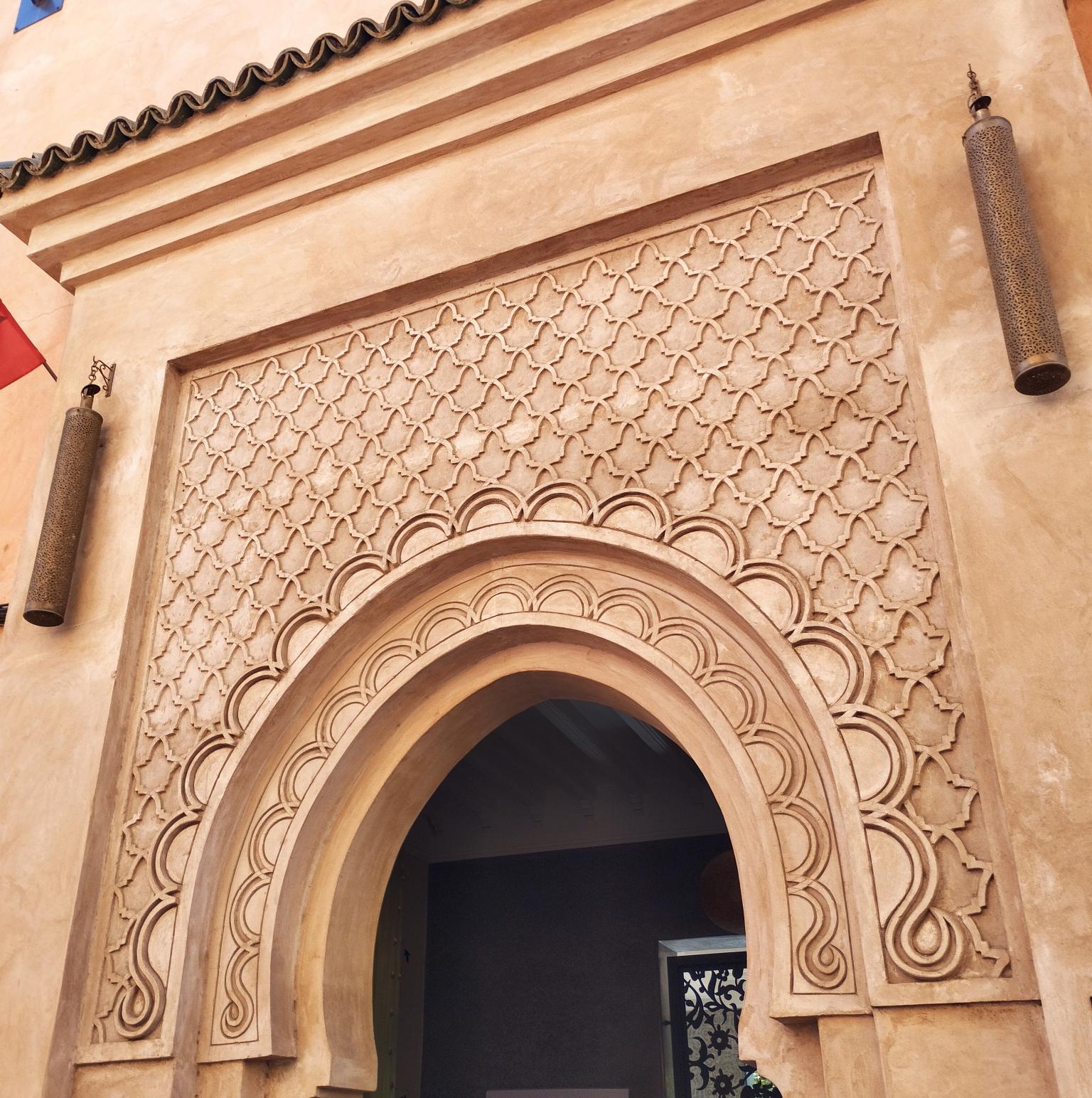
The architecture is the main event: carved stucco screens, painted and gilded cedar ceilings (some with the original 19th-century pigments still vivid), zellij tile floors and dado panels, and a large riad garden with trees that have been here since the 1860s. It is unambiguously beautiful in the detailed, close-up way that photographs don’t fully capture.
Entry Fee, Opening Hours, and Practical Details
Entry costs 70 MAD per person (roughly €6.50 / £5.50 at current rates). Tickets are available at the entrance, and most sources suggest bringing cash in dirhams - card payment at the gate is unreliable. You can also book via the Moroccan Ministry of Culture’s official ticketing site if you want to guarantee entry during busy periods.
Opening hours are daily 9:00 AM to 5:00 PM. During Ramadan (which falls in late January to mid-February in 2026), hours typically shorten to around 10:00 AM to 4:00 PM - confirm before you go if your visit coincides.
How long do you need? Give it 45 to 60 minutes if you’re moving at a reasonable pace. An hour and a half if you want to linger and take photos properly. The palace is not enormous, but it rewards slow walking - the ceilings especially take time to properly look at.
There is no audio guide included with entry. A guide (either booked in advance or one of the official guides who work near the entrance) will significantly deepen the experience, particularly for the history of Ba Ahmed and the construction timeline. More on that below.
When to Go (Crowd and Light Guide)
This is the thing most guides don’t tell you clearly: Bahia gets genuinely hectic between about 10:30 AM and 2:30 PM. Tour groups from the big hotels arrive in waves from mid-morning, and the interior courtyards - which are not enormous - fill up fast. Some areas feel more like a bottleneck than a palace at peak time.
Go at opening, 9:00 AM to 10:00 AM. This is the best window by some distance. You’ll have the Grand Courtyard nearly to yourself for the first 20 to 30 minutes, and the light in the painted ceiling rooms is at its cleanest before direct sun starts blasting through the openings.
Late afternoon, 3:30 PM to 4:45 PM, is the second-best option. Crowd numbers drop off significantly as tour groups move on. The light in the garden riad is warmer and more directional at this time, which works well for photos. The downside is that some of the more decorative interior rooms can be darker in the afternoon.
Avoid Fridays and Saturdays if you have flexibility - these tend to be the busiest days of the week. Midweek mornings in autumn (October to November) or spring (March to April) are the sweet spot for reasonable temperatures and manageable crowds.
Summer note: June to August inside the palace can be uncomfortably hot. The building has no air conditioning and some rooms with low ceilings trap heat. If you’re visiting in summer, the early morning window becomes even more important - both for the cooler air and the light.
Is It Worth It vs Saadian Tombs and El Badi?
These three sites form a natural cluster in the southern medina, and the honest answer is: yes, all three are worth it, and you can do all three in a single half-day.
Bahia Palace is the best-preserved interior experience of the three. The craftsmanship is intact - you’re seeing the zellij, the ceilings, the courtyard gardens in something close to their working state. It’s the most visually coherent of the three.
El Badi Palace is the ruins of a 16th-century palace built by Sultan Ahmad al-Mansur. It’s now an open-sky courtyard of crumbling walls and large reflecting pools. It lacks the decorative detail of Bahia, but the scale is impressive and it’s considerably less crowded. The terrace offers rooftop views over the medina. If Bahia is about craftsmanship and intimacy, El Badi is about atmosphere and scale. Entry is around 30 MAD.
Saadian Tombs are the royal mausoleum of the Saadian dynasty, rediscovered in 1917 after being sealed up for over a century. The chamber of the twelve columns is strikingly beautiful. Entry is 10 MAD. They’re small and can get very crowded in a short burst - keep your visit to 30 minutes or go right when they open.
My honest ranking: Bahia first, Saadian Tombs second, El Badi third - but that’s personal preference. El Badi is the most underrated of the three for photographs.
Combining the Three: A Half-Day Route
All three are within a 10 to 15 minute walk of each other. The most logical order is:
- Bahia Palace - arrive at 9:00 AM when it opens, spend 60 to 75 minutes
- Mellah - exit Bahia and walk northwest for 5 minutes into the old Jewish quarter. The Miara Jewish Cemetery (one of the largest in Morocco, dating to the 16th century) is a 3-minute walk from the palace and worth a quiet stop
- Saadian Tombs - about 10 minutes on foot from the Mellah, aim to arrive by 10:30 AM before the first wave of tour groups
- El Badi Palace - 5 minutes from the Saadian Tombs, allow 30 to 45 minutes
You’ll be done by noon, having covered the main southern medina sights before the heat peaks. See the Marrakech travel guide for a full map of the medina and walking routes.
For a structured two-day plan that fits all of this in, the Marrakech 2-day itinerary covers the sequencing in more detail.
Do You Need a Guide?
You don’t need one to navigate the palace - it’s a single route with enough signage. But the building makes a lot more sense with context, and the context is genuinely interesting.
Ba Ahmed was an extraordinary figure: born into a family of enslaved people, he rose to run a country. The palace he built was designed to impress and intimidate. Knowing that changes how you look at the rooms. Some of the ceiling rooms were for official reception; others were private quarters for his wives, each of whom had her own courtyard and household. The spatial politics of the building are fascinating if someone explains them.
Official local guides can be booked through your riad or directly at the entrance. Expect to pay 100 to 200 MAD for a 45 to 60 minute palace-specific guide. A private guide for the full southern medina half-day (Bahia, Mellah, Saadian Tombs, El Badi) will run 400 to 600 MAD and is worth it for a first visit. Browse the Marrakech guided tours for vetted options with fixed pricing.
Accessibility
The palace is mostly single-level with no significant steps in the main circulation route, which makes it relatively wheelchair-friendly compared to a lot of medina sites. The garden riad surfaces are uneven in places, and some of the smaller side rooms have shallow steps at the threshold. If accessibility is a concern, the main courtyards and principal decorated rooms are all reachable without steps - the secondary rooms are where you might hit barriers.
The route from Jemaa el-Fna to Bahia Palace (down Rue Riad Zitoun el-Jdid, about 900 metres) is mostly navigable but has the usual medina challenges: cobbles, motorcycles, uneven paving. For getting around the wider medina, the getting around Marrakech guide has practical advice including accessible transport options.
Photo Tips
The rooms with painted cedar ceilings are the money shots. For the best results:
- Visit early morning when the light is diffuse rather than harsh
- Bring a wide-angle lens or use your phone’s ultra-wide - the rooms are not enormous and standard focal lengths cut the ceilings off
- The Grand Courtyard with its orange trees and central fountain is busiest but also most photogenic - go early or wait for a gap between groups
- The riad garden (the larger of the two garden areas, from Si Musa’s original section) has dappled light for most of the morning
If photography is a priority for your Marrakech trip, the Marrakech photo spots guide has a curated list of the best locations across the medina.
Frequently Asked Questions
How much does Bahia Palace cost to enter?
Entry is 70 MAD per person (roughly €6.50 / £5.50). There are no concession rates for most categories - it’s the same price for adults regardless. Children under a certain age may be free, but this isn’t consistently enforced. Bring cash in dirhams to be safe.
What are the opening hours for Bahia Palace?
The palace opens daily at 9:00 AM and closes at 5:00 PM. During Ramadan, hours typically shorten to 10:00 AM to 4:00 PM. It is open every day of the week including Fridays, though Friday mornings tend to be busier than usual due to local visitors as well as tourists.
How long does it take to visit Bahia Palace?
Most visitors spend 45 to 60 minutes. If you want to take your time with the painted ceilings and the gardens, or if you’re with a guide who is explaining the history, budget 90 minutes. The palace is not enormous, but it’s dense with detail - you can rush through in 30 minutes but you’ll miss a lot.
Is Bahia Palace better than El Badi Palace or the Saadian Tombs?
They are very different experiences. Bahia has the best-preserved interiors and gives you the most detailed sense of traditional Moroccan craftsmanship. El Badi is ruins - atmospheric and uncrowded, but without interior decoration. The Saadian Tombs are a single set of burial chambers, small but very beautiful. All three are within walking distance; the most efficient approach is to visit all three in the same half-day rather than choosing between them.
When is Bahia Palace least crowded?
The quietest window is 9:00 AM to 10:00 AM, right at opening. After 10:30 AM, tour groups arrive and the interior rooms can get congested. A secondary quiet period is 3:30 PM to 4:45 PM before closing. Weekdays in shoulder season (March to May, October to November) are significantly quieter than weekends in summer.
Do I need a guide to visit Bahia Palace?
No - you can navigate it independently. But the history of the palace (and particularly the story of Ba Ahmed) is genuinely interesting and changes how you read the building. An official guide booked at the entrance costs 100 to 200 MAD for a palace-specific visit and is worth it for a first visit. For the wider southern medina route including the Saadian Tombs and El Badi, a private guide for the half-day runs 400 to 600 MAD.
Ready to Book?
Browse curated Morocco tours from verified operators, filtered by interest and budget.
Find Your Perfect Tour