Last updated: June 2026
Marrakech rewards photographers who get up early, move slowly, and ask before they shoot. I’ve been coming here since 2017 - six trips in total - and I still walk away with images I’ve never quite managed anywhere else. The city is genuinely that good. But I’ve also watched people leave disappointed because they arrived at Jardin Majorelle at 11am, found it shoulder-to-shoulder, and gave up. Timing is almost everything here.
This guide covers where I actually shoot, when, and what you need to know before you point a lens at someone. It’s practical, not pretty-worded.
Before diving in, check the Marrakech travel guide for the broader picture, and browse our Marrakech tours if you want a guide who knows the photogenic backstreets that most visitors never find.
Jardin Majorelle - The Cobalt Blue Garden
This is the one everyone comes for. Jacques Majorelle’s cobalt blue paint - a shade he actually had trademarked as “Majorelle Blue” - is like nothing else in Morocco. Yves Saint Laurent later owned and restored the garden, and his ashes are scattered here.
The problem: it’s been famous long enough that it draws serious crowds by mid-morning. If you arrive after 10am in summer, you will be fighting for a clean frame at every turn.
When to shoot: First thing when the gates open (8am most of the year, 9am on Fridays). The soft morning light filtering through the bamboo groves is genuinely beautiful, and you’ll have at least 30 minutes before it gets busy. Late afternoon is a second option but the light is harsher in that direction.
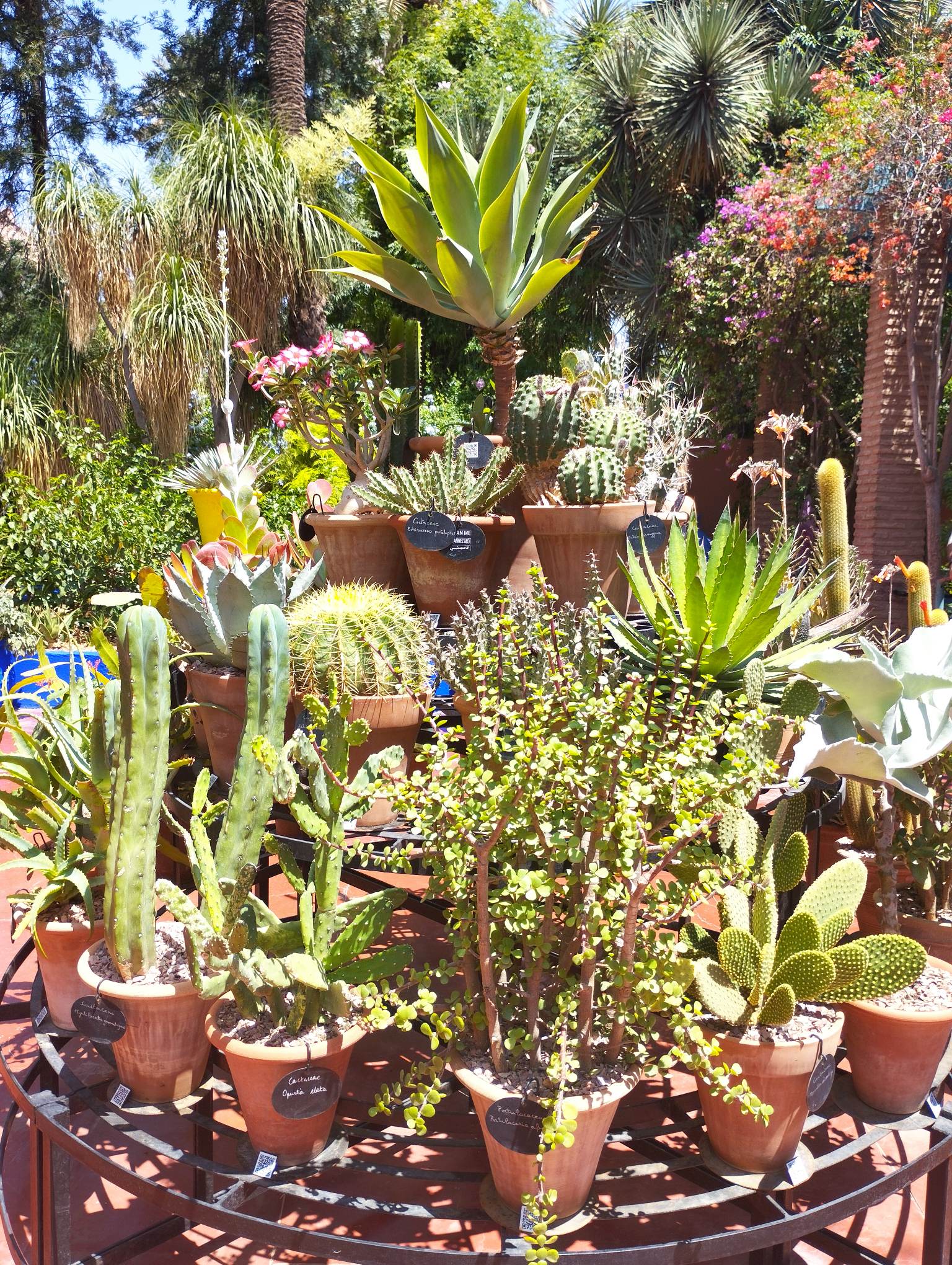
What to focus on: The contrast between the cobalt walls and the terracotta pots. The lily pond. The cactus garden section is often overlooked but photographs brilliantly. The Berber Museum inside has good interior light if you visit in the morning.
Book tickets online - the queues for walk-in tickets are long. Pre-booking is now standard and worth doing.
See our dedicated Jardin Majorelle guide for opening hours and the full visit logistics.
Ben Youssef Medersa - The Finest Interior in the Medina
This 14th-century Quranic school is, for my money, the single most photogenic interior in all of Marrakech. The central courtyard has a marble pool, carved cedar screens, intricate zellij tilework, and archways stacked four storeys high. When the morning light hits the upper gallery it is extraordinary.
When to shoot: Arrive when it opens (9am). The light through the upper windows catches the courtyard at its best in the morning hours. By 11am the tour groups arrive and it becomes very crowded.
Tips: Use a wide angle if you have one - the courtyard is tall and relatively narrow. The student cells on the upper floors offer a different perspective looking down into the courtyard. Photography is permitted throughout.
It is a former place of Islamic study. Be respectful - dress modestly, speak quietly, and don’t clamber on the tilework to get a better angle. I’ve seen people do this. Don’t.
Bahia Palace Courtyards
The Bahia Palace was built in the late 19th century for the Grand Vizier of the Sultan. The scale is enormous - 8 hectares, 150 rooms - and the painted wooden ceilings, mosaic floors, and open courtyards give you something different to shoot in every room.
When to shoot: Opening time (9am) again. The light in the main reception hall comes from courtyard openings to the east, so it’s nicest in the morning. The garden courtyard is large enough that it doesn’t feel congested until mid-morning.
What to focus on: The painted ceiling of the Grand Courtyard is one of the finest examples of traditional Moroccan craftsmanship in the city. The tiled corridors leading between rooms. Doorways framed by orange trees in the garden.
Full visit details are in our Bahia Palace guide.
Le Jardin Secret
This restored 19th-century riad in the heart of the medina is smaller than the other gardens but often overlooked by visitors. Two gardens - one Islamic, one exotic - sit within the walls of a beautifully renovated palace.
When to shoot: It’s calmer than Majorelle at almost any time, but early morning is still preferable. The tower inside offers a rooftop view over the medina that rivals any cafe and costs less than a coffee at some of them.
What to focus on: The Islamic garden’s formal geometry photographs well from any angle. The fountain courtyard. The tower view north toward the minaret tops.
Rooftop Cafes Over Jemaa el-Fnaa
There are a dozen rooftop cafes around the main square. Most charge inflated prices for average coffee and the right to sit with a view. A few are worth it.
The best photography position over Jemaa el-Fnaa is from the cafes on the north side of the square, roughly above the Cafe de France area. From there you can shoot down into the square with the Koutoubia in the background to the west.
When to shoot: Late afternoon into early evening when the square comes alive with smoke from the food stalls, musicians, and snake charmers. This is when the real energy of Jemaa el-Fnaa builds. If you want the square relatively empty and the light soft, come up for sunrise - before 6am in summer - and you’ll have almost no competition.
A phone on a table edge works fine here. You don’t need a tripod on the rooftops.
The Souks - Colour, Light, and Getting It Right
The souks north of Jemaa el-Fnaa are the most photographed market district in Africa. The spice stalls, dye pits, leather tanneries, lantern workshops, and carpet traders all offer extraordinary visual material.
When to shoot: Before 9am, the alleys are quiet, delivery carts are moving through, and the light filtering down between the rooftop lattices is genuinely magical. By 10am it’s busy. By noon it’s chaotic.
Gear: Your phone is actually your best friend in the souks. A large DSLR marks you out and increases the chance of being pestered or of making people uncomfortable. Phones are less conspicuous and the latest models produce excellent results in the mixed light of the covered alleys.
The “pay for photo” reality: You will encounter this. Someone will wave you toward a colourful stall or an arrangement of goods, wait for you to raise your camera, and then demand payment. This is an established practice and not inherently dishonest - these people are running a business and their stall or face is their product. If you weren’t going to buy anything, paying a few dirham for the shot is fair.
What I’d push back on is the aggressive version where someone follows you demanding payment for a photo you didn’t take or for a scene you photographed from a distance. Politely decline, keep moving.
Read our full Marrakech souks guide for navigation tips and what to buy.
Koutoubia Mosque at Sunset
The Koutoubia is the tallest structure in Marrakech - 70 metres high - and it dominates the western skyline of the medina. Non-Muslims cannot enter, but you don’t need to. The gardens surrounding the mosque are public and beautifully kept, and the minaret photographs brilliantly from the south side in the last hour of light.
When to shoot: 45 minutes before sunset. The light goes warm orange-red and the minaret glows. In summer this can be 7:30 to 8pm local time. In winter it’s around 5pm.
Practical note: The rose gardens to the south of the mosque are a calm place to sit after a day of medina chaos. Worth factoring into your evening even if you’re not primarily there to shoot.
Doorways and Architectural Details
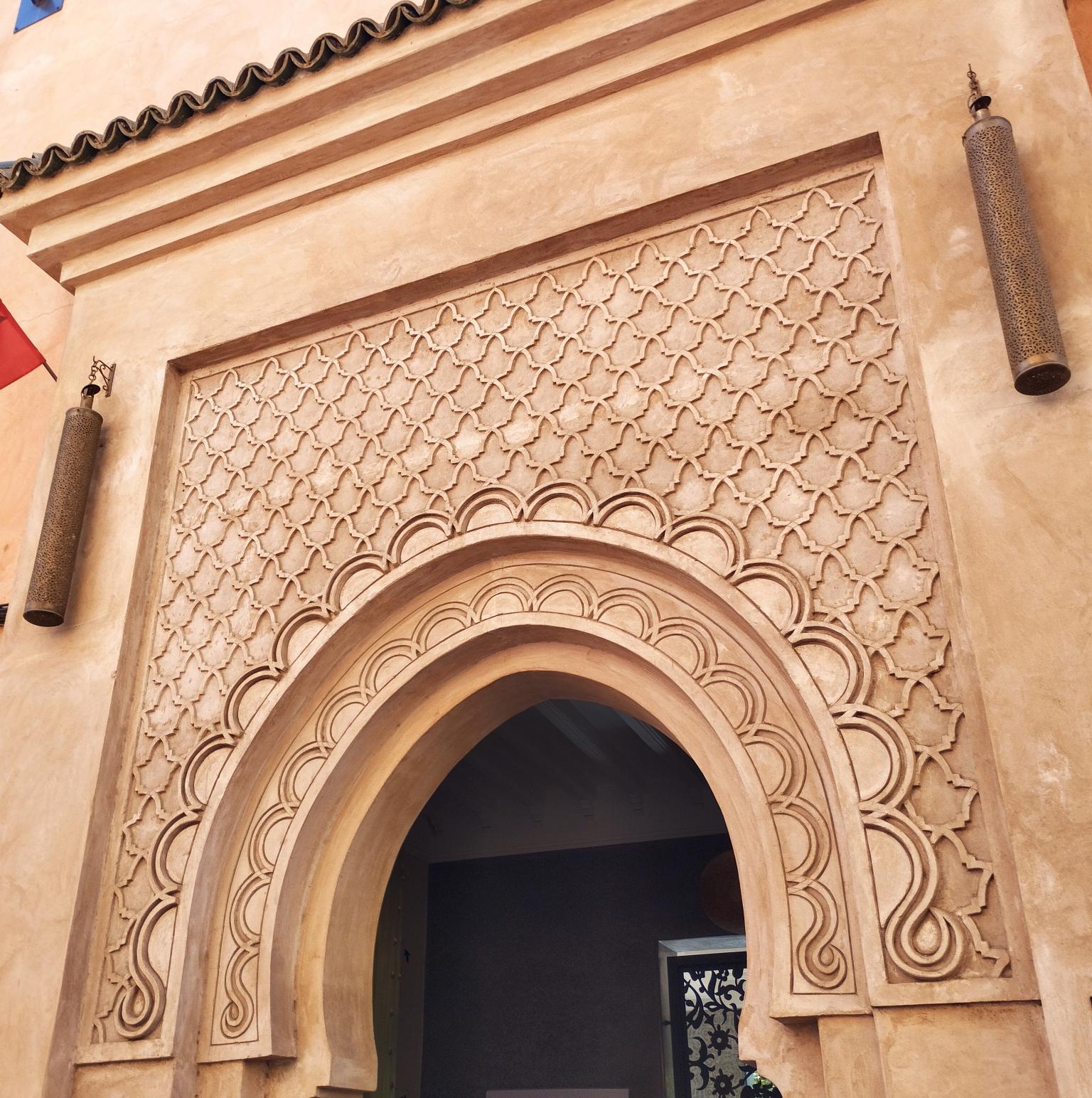
Every second street in the medina has a door worth photographing. Studded wooden doors in painted arches, tiled surrounds, zellige patterns, knockers shaped like the Hand of Fatima. These don’t require any etiquette navigation - they’re just there, and no one minds.
The Mellah (Jewish Quarter) around Derb Semmarine has particularly beautiful doorways with a distinct architectural character, different from the rest of the medina. Worth half an hour on any itinerary.
Photographing People - The Honest Version
This section matters. Marrakech has been photographed by millions of tourists, and many locals - particularly women - have grown tired of being treated as part of the scenery.
Ask first. The Arabic phrase “Mumkin taswira?” (may I take a photo?) goes a long way. A smile and a gesture toward your camera works when language doesn’t. People who say yes generally mean it. People who look away or shake their head mean no.
Never photograph people praying or in religious contexts. This is not optional.
Children: Never photograph a child without explicit permission from a guardian. Full stop.
The performers and traders in Jemaa el-Fnaa - the snake charmers, the henna artists, the fortune tellers - operate a pay-for-photo economy. If you photograph them, expect to pay. 10 to 20 dirham is standard. If you don’t want to pay, don’t photograph.
A note on candid photography in the souks: Shooting street scenes from a distance where no individual is the clear subject is generally fine. Getting close to someone’s face without asking is not, regardless of how great the shot might be.
The most meaningful portraits I’ve taken in Morocco came after ten minutes of conversation and a cup of tea. The results are better, and it feels right.
Frequently Asked Questions
What is the best time of day to photograph Marrakech?
Early morning - before 9am - is the single most important advice I can give. The light is soft, the alleys are quiet, and you’ll avoid the crowds that fill every major attraction by 10:30am. Sunrise and the first two hours after are genuinely special in the medina.
Can you take photos inside Jardin Majorelle?
Yes, photography is permitted throughout Jardin Majorelle including the gardens and the exterior of the Berber Museum. You cannot photograph inside the museum itself. Book tickets in advance to avoid long queues.
Is it rude to photograph people in the souks?
It depends on how you do it. Taking wide shots of the souk environment is generally fine. Photographing individuals - particularly close-up portraits - without asking first is considered rude by many locals. Ask permission, be prepared to pay a small amount if someone says yes, and accept no gracefully.
What camera gear should I bring to Marrakech?
Your phone is genuinely sufficient for 90% of Marrakech photography. In the souks especially, a phone draws far less attention than a camera with a lens. If you want to bring a dedicated camera, a compact mirrorless with a 24-70mm equivalent range covers most situations. A wide angle is useful for the Ben Youssef Medersa courtyard. You rarely need a tripod unless you’re shooting specifically at night.
Can you photograph the Koutoubia Mosque?
You can photograph the exterior and the surrounding gardens freely. Non-Muslims cannot enter the mosque itself. The best exterior shots come from the rose gardens to the south in the late afternoon light.
Is Jemaa el-Fnaa good for photography?
It is one of the most photogenic squares in the world, but it requires some patience. Early morning (before 7am) gives you the square almost to yourself with beautiful soft light. Late afternoon and evening give you the full energy - food stalls, performers, smoke, noise - but also crowds. The rooftop cafes on the north side give you elevated shots over the whole scene.
Ready to Book?
Browse curated Morocco tours from verified operators, filtered by interest and budget.
Find Your Perfect Tour