Last updated: June 2026
Two days in Marrakech is genuinely enough to feel the city rather than just survive it - but only if you don’t try to do everything. This itinerary is built for first-timers who want to leave with a real sense of the place, not a checklist of photos taken from a moving taxi.
I’ve been to Marrakech six times since 2017. The version below is what I’d actually plan for a friend with 48 hours and no prior Morocco experience. It cuts the things that look impressive on paper but eat time for little reward, and it keeps the things that genuinely stay with you. For tours that cover any of these sites with a local guide, browse our Marrakech options.
Before You Go: A Few Things Worth Knowing
Walking vs taxi: The medina is best on foot. Taxis (petit taxis, small red cars) are for getting from the medina to Gueliz or Jardin Majorelle - not for navigating inside the old city walls, where the streets are too narrow and too convoluted. Fix a price before you get in; expect 15-30 MAD for most short rides.
Faux guides: Strangers who offer to “show you the way” near Jemaa el-Fnaa or the Medersa are almost always faux guides working for a commission. A polite “no thank you” and continued walking is enough - it rarely escalates. If you want expert context, book a guided tour in advance.
Cash: Bring dirhams. Most medina sites are cash only. ATMs are plentiful on Avenue Mohammed V in Gueliz.
For a full picture of where to base yourself, see our Marrakech travel guide.
Day 1: The Medina
8:30am - Medersa Ben Youssef
Start early. The Medersa is the most architecturally significant thing you’ll see in two days, and it’s genuinely better before the tour groups arrive around 10am.
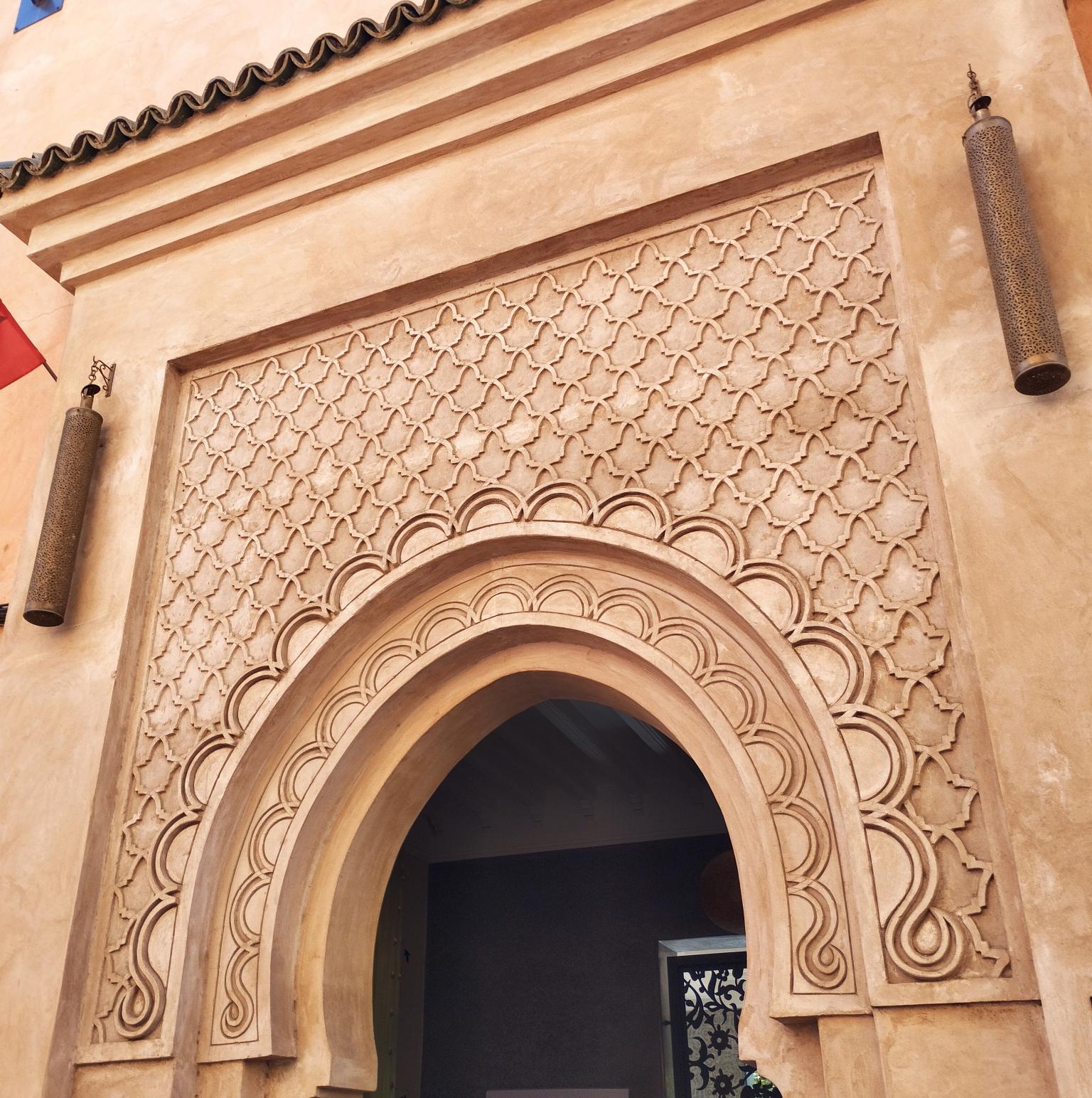
The Medersa Ben Youssef was a Quranic school built in the 14th century and expanded in the 16th. At its peak it housed around 900 students. What you’re walking into is one of the finest examples of Moroccan Islamic architecture anywhere - carved plasterwork, cedarwood screens, zellige tilework in patterns that you’ll find yourself staring at for longer than you planned.
Practical details (verified June 2026): Open daily 9:00am to 7:00pm (Ramadan: 9:00am to 4:30pm). Entrance fee is 50 MAD for foreign adults, 10 MAD for children under 12 (source: medersabenyoussef.ma). Budget 45-60 minutes.
10:00am - The Souks
From the Medersa, walk south into the souk quarter. The souks cluster by trade: leather near Souk des Babouches, spices near Place Rahba Kedima, metalwork and lanterns closer to the central souk spine.
You will get lost. That is fine. The medina is not as large as it feels. If you need to reorient, ask any shop owner “Jemaa el-Fnaa?” and you’ll get a pointed finger.
What to buy: Argan oil is genuinely cheaper here than at home, but buy from a co-operative with clearly displayed prices. Babouches (leather slippers) travel well. Ignore “special market day” pitches - there is always one.
Allow 60-90 minutes to wander.
11:30am - Coffee break
The souks will exhaust you faster than you expect. Find a rooftop cafe and sit for 20 minutes. Cafe Arabe on Rue el Mouassine has a terrace that works well for this.
12:30pm - Bahia Palace
Walk or take a short petit taxi south to Bahia Palace. This 19th-century palace was built for Si Moussa, a former slave who rose to become grand vizier, and later extended by his son. It covers around 8,000 square metres, though only a portion is accessible to visitors.
The appeal is the scale and decorative ambition - painted ceilings, tiled courtyards, carved stucco, a harem garden. It’s less austere than the Medersa and more visually overwhelming. Worth an hour.
Practical details (verified June 2026): Open daily 9:00am to 5:00pm (last admission 4:30pm; Ramadan: 10:00am to 4:00pm). Entrance fee is 100 MAD for foreign adults, 30 MAD for children aged 7-13. Tickets at the entrance.
What to cut if tired: If your feet are already done, skip the Bahia and sit in Jemaa el-Fnaa instead. The Medersa outranks it.
2:00pm - Lunch
Budget (under 80 MAD): The streets just off the Mellah (old Jewish quarter, near Bahia) have local restaurants serving harira, kefta and pastilla. Point and nod works fine.
Mid-range (150-250 MAD): Nomad on Derb Aarjane has a rooftop, reliable food, and English menus. Arrive by 1pm or after 2:30pm to avoid the wait.
Avoid the restaurants ringing Jemaa el-Fnaa during the day - mediocre food, relentless touts.
3:30pm - Rest at the Riad
Non-negotiable. Go back to your riad for 90 minutes. The afternoon heat (especially in summer) is punishing, and you’ll need the rest before the best part of the day. If you’re in Gueliz, taxi back, freshen up, and return.
5:30pm - Jemaa el-Fnaa at Dusk
This is why you’re here. Jemaa el-Fnaa is Marrakech’s central square, and it transforms completely as the sun drops. The snake charmers and henna artists who dominate the daytime are gradually replaced by food stalls, storytellers (in Darija, but worth watching), musicians, and what feels like half the city coming out to breathe cooler air.
Walk the perimeter first without engaging anyone, then find a rooftop cafe overlooking the square - Cafe de France or Cafe Glacier both work - order a mint tea (20-25 MAD) and just watch.
The square fills properly between 6pm and 9pm. Food stalls open around 7pm; the cooked snail stalls are worth trying if you’re curious (10 MAD a bowl).
Dinner: Eat at the stalls if you want the full experience - find one with a busy local crowd. Dar Yacout on Rue Sidi Ahmed Soussi is a splurge that justifies itself once. For a rundown of what to watch out for here, see our guide to Jemaa el-Fnaa scams.
Day 2: Gueliz, the Garden, and a Hammam
8:00am - Jardin Majorelle
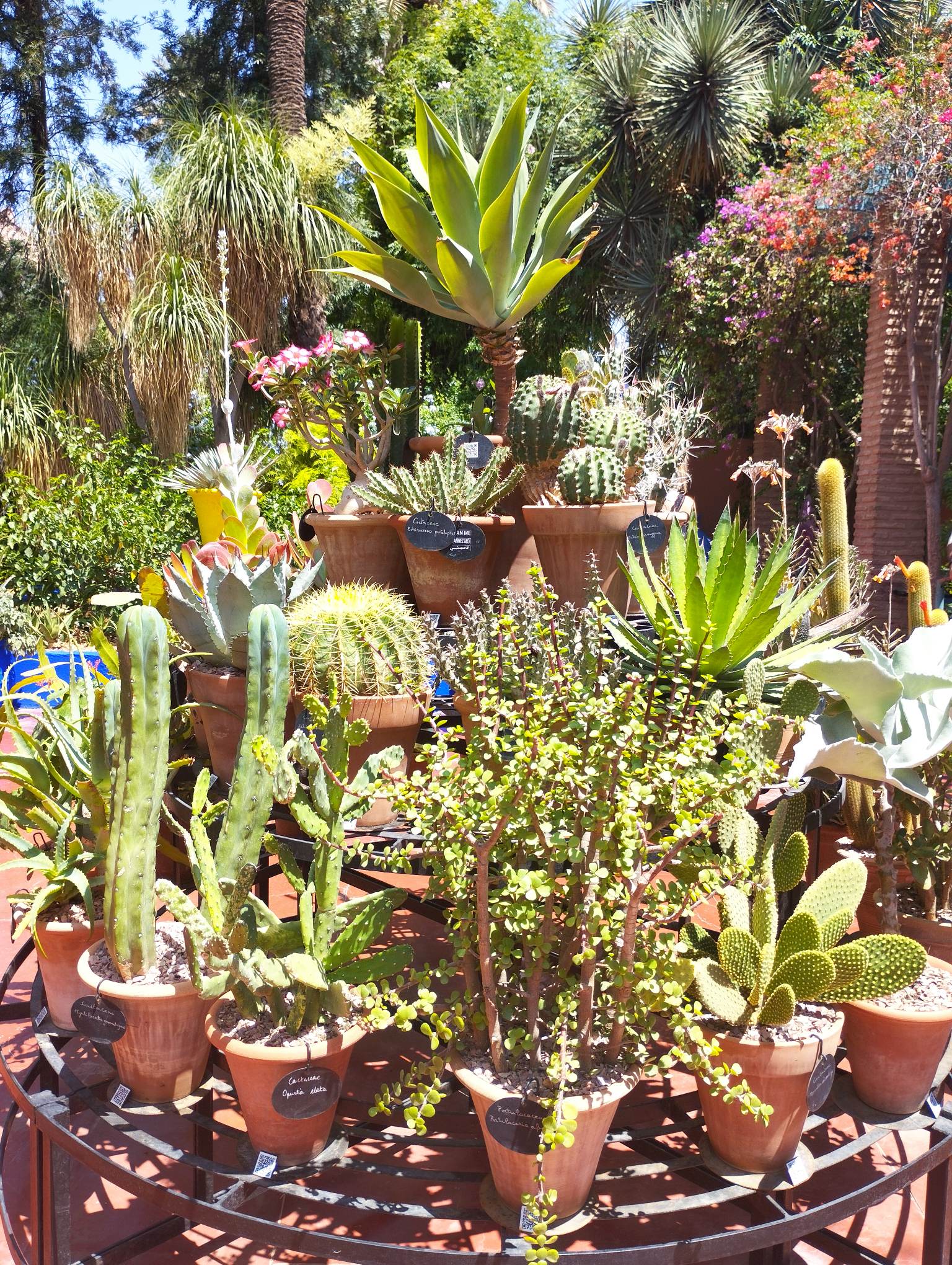
Get here when it opens. Jardin Majorelle is Morocco’s most visited attraction, and by 10am it is genuinely crowded. At 8am, with the garden still in morning shadow and the peacocks wandering the paths undisturbed, it’s a different experience.
The garden was created by French painter Jacques Majorelle in the 1920s-30s, then restored by Yves Saint Laurent and Pierre Bergé after they purchased it in 1980. The distinctive cobalt blue - “Majorelle blue” - was Majorelle’s own invention. The Berber Arts Museum inside adds real depth.
Practical details (verified June 2026): Open daily 8:00am to 6:30pm (last entry 6:00pm). Adult ticket is 170 MAD (source: jardinmajorelle.com). Children under 10 free. Tickets must be booked online at tickets.jardinmajorelle.com - no gate sales. Budget 90 minutes.
Getting there: Taxi from the medina, around 30-40 MAD, 10 minutes. About 3km from Jemaa el-Fnaa.
10:30am - Gueliz and the Ville Nouvelle
After Majorelle, walk or taxi into Gueliz, Marrakech’s French-built new town. Wide boulevards, European-style cafes, pharmacies - a useful contrast to the medina that helps explain how the city works today. See our comparison of Marrakech medina vs Gueliz if you’re deciding where to base yourself.
12:00pm - Lunch in Gueliz
Kechmara on Rue de la Liberte is a solid lunch spot - French-Moroccan hybrid menu, reliable coffee, and a terrace. Expect to pay 150-220 MAD per person. Al Fassia on Boulevard Zerktouni is a slightly more formal option run by women and serving traditional Moroccan cooking - the bastilla pastilla here is excellent.
2:00pm - Hammam
A traditional hammam is worth doing once, and two days in Marrakech is the right amount of time to include it without it feeling forced. There are two types:
Traditional neighbourhood hammam: Cheaper (20-40 MAD) and more authentic, but you’ll need to know what you’re doing, bring your own kessa (scrubbing mitt) and soap, and be comfortable in a same-sex communal space with no English-speaking staff. Worth it if you’re curious and unfazed by that.
Tourist hammam: Places like Hammam de la Rose or Les Bains de Marrakech offer a more structured experience (hammam + gommage scrub + massage packages from around 250-450 MAD). Less raw, but you get a proper exfoliation and won’t feel lost.
Whichever you choose, allow 90 minutes to 2 hours and drink water beforehand.
4:30pm - Afternoon wander back towards the medina
If you have energy, walk back through the Mellah or take a different medina route than Day 1. The streets around Mouassine are quieter. Mouassine Fountain is a small 16th-century public fountain worth finding if you spot it.
6:00pm - Rooftop sunset
Find a rooftop. Nearly every riad has one. If yours doesn’t, Le Jardin on Rue Sidi el Yamani works well. Order a freshly squeezed orange juice (15-20 MAD) and watch the light change over the medina. This is the part of Marrakech most people say they didn’t expect. Protect this hour.
Dinner: If budget allows, Le Tobsil on Derb Moulay Abdellah Ben Hezzian is an old-school Moroccan feast (set menu, around 450-500 MAD per person). Otherwise, walk back to the neighbourhood restaurant you found on Day 1.
Planning a Longer Trip
Two days barely scratches the surface. If you can extend to three, our 3-day Marrakech itinerary adds a day trip to the Ourika Valley or Agafay Desert and gives more breathing room in the medina. For a full week in Morocco, the city works best as a bookend - start here, then head into the Atlas Mountains or the desert, and return for a final night. See where to stay in Morocco for how to structure a longer route.
Frequently Asked Questions
How many days do you actually need in Marrakech?
Two days covers the medina essentials (Medersa Ben Youssef, Bahia Palace, Jemaa el-Fnaa) and Jardin Majorelle. Three days is more comfortable and allows a half-day trip outside the city. Much beyond four days and you’ll start repeating the souk wander.
Is Marrakech safe for solo travellers?
Yes, including for solo women. The medina is well-populated at all hours and doesn’t feel threatening. The main nuisance is persistent attention from touts, which is draining but not dangerous. Stick to busy streets after dark and ignore rather than engage.
Do you need to pre-book tickets for Jardin Majorelle?
Yes. Tickets are only sold online now at tickets.jardinmajorelle.com. The garden no longer accepts walk-ins at the gate. Book at least a day or two in advance - in high season (March-May, September-October), it can sell out.
What is the best time to visit Marrakech?
March to May and September to November. Warm, good light, busy without being overwhelming. July and August regularly hit 38-40°C and are best avoided. December to February is mild and quiet, with occasional rain.
Should you hire a guide for the medina?
Worth considering for a first visit - not because the medina is hard to navigate, but because a good guide transforms what you’re seeing. The difference between walking past a carved door and understanding the period and craftsmen behind it is significant. Book through your riad or a licensed tour operator, not from someone who approaches you on the street.
How do you get from Marrakech airport to the medina?
The official airport taxi rank is outside arrivals. The fixed rate to the medina is set by the city and is around 100-120 MAD (roughly €9-11) - this covers the whole car, not per person. Confirm the fare is metered or agreed before you get in. Uber and Careem also operate in Marrakech and are often cheaper and more transparent on pricing.
Ready to Book?
Browse curated Morocco tours from verified operators, filtered by interest and budget.
Find Your Perfect Tour