Last updated: June 2026
The food in Chefchaouen is genuinely good - better than you might expect from a town whose main draw is its paint job. The Rif Mountains shape the local cooking in real, interesting ways. But the square restaurants will take your money and disappoint you. Here is how to eat well here.
Chefchaouen sits at around 600 metres in the Rif Mountains, and that altitude changes everything on the plate. The produce is different from the coast. The proteins are different from Marrakech. Local cooks have been making food from mountain ingredients - goat, trout, fava beans, wild herbs, walnuts, honey - for centuries. That’s what you want to be eating. What you don’t want is a watery tagine on Plaza Uta el-Hammam while a waiter hovers hoping you’ll order a second Coke.
If you’re planning your full stay, our guide to Chefchaouen covers the practicalities. This post is just the food.
The Local Specialities Worth Knowing
Jben (fresh goat cheese): This is the one. Soft, mild, slightly crumbly fresh goat cheese made from local Rif goats, usually served drizzled with mountain honey on a plate with warm bread. It’s sold at small cheese stalls and served in guesthouses at breakfast. A plate costs around 20-30 MAD. Don’t leave without eating this at least twice.
Fresh mountain trout: The rivers running out of the Rif produce excellent trout. In Chefchaouen itself it turns up on most restaurant menus, usually grilled simply. It’s worth eating. If you day-trip to Akchour - which you should, it’s 28km away and stunning - you can eat trout there that was in the river an hour earlier. That’s the better version. Our things to do page covers the Akchour trip.
Bissara: A thick soup of split dried fava beans, blended smooth, finished with olive oil, cumin, and paprika. It’s a breakfast food here, eaten by locals from small no-sign stalls from around 6am until mid-morning. A bowl with bread costs 10-20 MAD depending on where you sit. It’s filling, warm, and cheap. Look for the small aluminium pots simmering on gas rings down the alleys off the main square.
Tagines: Chefchaouen’s tagines tend to run heavier and more herby than those in Marrakech - lamb with prunes and almonds, chicken with olives and preserved lemon, vegetable versions with chickpeas and seasonal greens. The quality ranges from excellent to fine to disappointing-at-twice-the-price depending entirely on where you eat.
Harira: The standard Moroccan soup - tomato, lentils, chickpeas, coriander, a little flour to thicken. You can eat a good bowl anywhere, usually with dates and a chebakia pastry, for 15-20 MAD.
The Square: View vs Food Quality Tradeoff
Let’s be direct about Plaza Uta el-Hammam. It’s the heart of the medina, a beautiful old space with a ruined kasbah on one side and the mosque on the other, ringed by restaurants with terrace tables. The view over the square with a mint tea as the light fades is genuinely lovely. The food from most of those restaurants is not.
The cafes and restaurants facing the square charge a significant premium for their position. Tagines that would cost 50-60 MAD in the alleys behind cost 90-120 MAD here. The cooking is often reheated or batch-cooked and held. Staff spend more energy flagging you down from the doorway than cooking anything interesting.
If you want to sit on the square - and it’s a nice thing to do - have a mint tea or coffee (15-25 MAD for tea, fair for the location), enjoy the atmosphere, then go somewhere else to eat. Don’t let the ambiance carry you into an expensive mediocre meal.
The exception worth noting: a couple of spots just above the square, up one of the side alleys, offer rooftop views over the medina without the full square-facing premium. These tend to be better value and less aggressive about getting you seated. Worth exploring on foot before you commit.
Where the Genuinely Good Food Is
The best eating in Chefchaouen is in small places down the blue alleys with no English signage, run by one family, serving whatever they cook that day. You find these by walking and following your nose, or by asking your riad host rather than reading the signs that say “BEST TRADITIONAL FOOD BEST PRICES COME IN.”
A few reliable patterns:
All-women-run spots near the square - there are a handful of small restaurants where the cooking is done by local women. One frequently cited example is the spot known as Sofia’s, just off the main square, where the vegetable tagines have an excellent reputation and the prices are more than fair - a full meal around 50-60 MAD. These places tend to run out of food by early afternoon, so eat lunch before 1pm if you want a seat.
The restaurant strip on Rue Targhi - the streets that run parallel to the main medina alleys, slightly away from the tourist flow, have several places serving proper set lunches. Look for the Moroccan families eating, not just tourists.
Dar Zitoun and similar guesthouses with restaurant evenings - some of the better riads and guesthouses open their kitchens to non-guests for dinner. These tend to be the highest quality cooking in town, in courtyard settings, for around 100-150 MAD for a full meal. Worth booking ahead if your accommodation can recommend one.
If you’re thinking about where you’re staying and what that means for breakfast, our where to stay in Chefchaouen guide covers which guesthouses actually feed you well.
Vegetarian Eating in Chefchaouen
Chefchaouen is notably good for vegetarians - better than most Moroccan cities, because the mountain larder is naturally plant-forward. The local cheese, the beans, the walnuts, the fresh vegetables from the Rif - most of this is vegetarian by default.
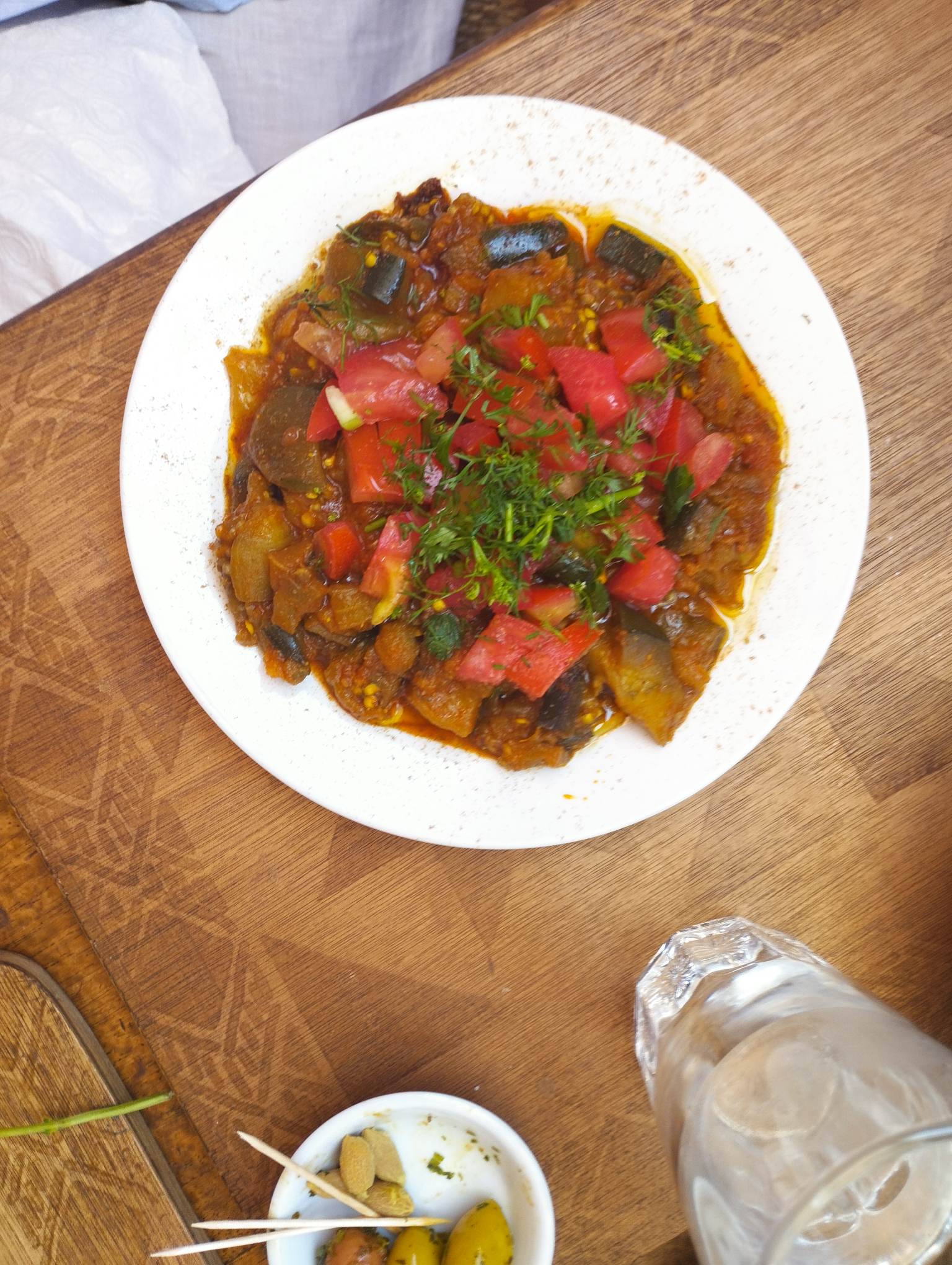
You can eat entirely vegetarian without working at it. Bissara is vegan. Jben and bread is vegetarian. Vegetable tagines with chickpeas and seasonal greens are on every menu. Zaalouk (smoky aubergine and tomato salad) and taktouka (roasted peppers and tomatoes) show up as side dishes. Msemen - the layered flatbread - with olive oil and honey is a perfect breakfast.
The slight catch: always confirm. “Vegetarian tagine” sometimes arrives with a lamb bone in it because that’s how the stock was made. Ask specifically whether it contains any meat or chicken broth. Most places will accommodate properly if you’re clear about it. This is less of an issue in the smaller family spots than in the tourist-facing square restaurants. For more context on Moroccan food culture and what to expect around meat and dietary requests, see our Morocco food and culture guide.
Street Snacks and Cheap Eating
The street food scene in Chefchaouen is modest compared to Marrakech but reliable. What you’ll find:
Msemen and rghaif vendors in the morning - flaky layered flatbreads cooked on a griddle, eaten with honey or olive oil. 3-5 MAD each. Find them near the square from about 7am.
Bissara stalls - described above. The real ones are small, unlabelled, and busy with locals. If you see a sign in English outside, that’s not the one.
Maakouda - fried potato cakes, sold from carts. Cheap, filling, better than they sound. 5-10 MAD for a couple.
Seasonal fruit - the market near the bus station area has good fruit stalls. Figs, pomegranates, cherries in season, depending on your timing.
Kefta sandwiches in the evening - a few grills set up in the late afternoon, around 5-6pm. Fresh kefta (spiced minced lamb) in bread with chermoula and harissa. 20-30 MAD for a proper sandwich.
Budget reality: if you eat like a local - bissara breakfast, street snacks for lunch, a sit-down dinner at a non-square restaurant - you can eat very well for 100-120 MAD (roughly £8-10) per day. Eating exclusively in tourist restaurants near the square, you’ll spend 200-350 MAD and eat worse.
You can also join one of the Explora Morocco tours that route through Chefchaouen - our guides know where to eat and will take you to the right spots rather than leaving you to decode it alone.
Mint Tea and Where to Drink It
Mint tea is ceremony as much as drink. Made with gunpowder green tea, fresh spearmint, and a significant quantity of sugar, poured high to create foam. You’ll be offered it in shops (often a sales tactic), riads (genuine hospitality), and cafes (either).
For a proper mint tea experience that isn’t attached to a carpet presentation:
- Small cafes around the Kasbah square serve tea for 5-10 MAD
- Tourist cafes on the main square charge 15-25 MAD - the tea is the same, you’re paying for the seat
- Your riad will almost certainly offer it on arrival and it’ll be the best version you have, because they’re trying to make you feel welcome
Coffee culture is also real here. Cafe au lait (half coffee, half hot milk) is the local breakfast drink. Good espresso is harder to find but Cafe Clock has decent coffee at a price point that reflects its Western-facing positioning.
Avoid the “special tea” or “Berber whisky” pitches from anyone who doesn’t appear to be running an actual restaurant. It’s just tea with herbs at an inflated price.
Prices and What to Expect
Quick reference for what things actually cost in 2026:
- Bissara and bread: 10-20 MAD
- Msemen street snack: 3-5 MAD each
- Mint tea on the square: 15-25 MAD
- Mint tea in a local cafe: 5-10 MAD
- Jben with honey and bread: 20-35 MAD
- Full vegetable tagine (local restaurant): 45-65 MAD
- Grilled trout (local restaurant): 60-90 MAD
- Full meal on the main square: 90-150 MAD
- Full meal off the square: 50-80 MAD
Most restaurants are cash only. A few of the more tourist-forward places (Cafe Clock is the most commonly cited) take cards. Bring dirhams.
Frequently Asked Questions
What is the local food of Chefchaouen?
The Rif Mountain setting produces a distinctive larder: jben (fresh goat cheese) drizzled with honey, fresh mountain trout from local rivers, bissara (split fava bean soup with olive oil and cumin), and hearty tagines with lamb or vegetables. Walnuts, dried figs, mountain honey, and locally pressed olive oil show up throughout. The food is noticeably different from coastal Morocco or Marrakech - simpler, earthier, and very good if you seek it out.
Is Chefchaouen good for vegetarians?
Yes, surprisingly so. Bissara is vegan. Jben and bread is a great vegetarian meal. Vegetable tagines are on most menus and the local cooking tradition leans heavily on legumes, dairy, and fresh vegetables. You’ll eat well without effort. Just confirm specifically that a tagine doesn’t use meat-based stock if you want to be certain - it’s worth asking clearly.
Are the restaurants on the main square good?
The view is good. The food generally is not worth the price premium. Most square-facing restaurants serve reheated or batch-cooked dishes at 50-100% more than you’d pay one alley back. Have a tea and enjoy the atmosphere, then eat somewhere else. The better cooking is in small family-run spots in the alleys a few minutes’ walk away.
How much does food cost in Chefchaouen?
You can eat very well on 100-120 MAD (around £8-10) per day eating locally: a 15 MAD bissara breakfast, street snacks for 20-30 MAD, and a 50-70 MAD sit-down dinner. Eating all your meals in tourist restaurants near the square will cost 200-350 MAD and the food will be worse.
Where can I find the freshest trout in the area?
In Chefchaouen town, most restaurants serve decent grilled trout from local mountain rivers. The absolute best is at Akchour, about 28km away, where small restaurants at the base of the gorge serve fish caught the same day. If you’re doing the Akchour waterfall walk - which is worth a full day - eat lunch there. Most of our Explora Morocco tours that include Chefchaouen stop at Akchour.
Do Chefchaouen restaurants accept cards?
Most do not. Cash (Moroccan dirhams) is the standard. A handful of the more tourist-oriented places accept cards - Cafe Clock is the most reliable example. Bring enough dirhams before you head into the medina; there are ATMs near the entrance but fewer inside.
Ready to Book?
Browse curated Morocco tours from verified operators, filtered by interest and budget.
Find Your Perfect Tour