Last updated: June 2026
Two days in Fes is enough to fall completely in love with the place - and also to feel genuinely lost, slightly overwhelmed, and very grateful you brought good shoes. I have visited Fes six times since 2017. My first day in the medina I hired a licensed guide and it was one of the best decisions of the trip. My second visit I tried to do it alone and spent 45 minutes in a circle before ending up back where I started. Here is what actually works.
This itinerary assumes you are staying inside Fes el-Bali, the old medina, ideally at a riad. If you are staying in the Ville Nouvelle, add 15-20 minutes’ travel each way. Check the where to stay in Fes guide if you haven’t booked yet.
Day 1: The Medina With a Guide
Morning: Bab Boujloud to Bou Inania Medersa
Start at Bab Boujloud, the ornate blue-and-green gate on the western edge of Fes el-Bali. It is the most photogenic entry point into the medina and the logical start of Talaa Kebira, the main artery running downhill through the old city.
If you have arranged a licensed guide - and I strongly recommend it for day one - they should meet you here around 9am. Mornings are cooler, less crowded, and the light is better for photography. Guide rates from the official Ministry of Tourism tariff are around 300 MAD for a half day (3-4 hours) and 600 MAD for a full day. Expect your riad to arrange something in the 400-500 MAD range for 5-6 hours, which is fair.
Do not let anyone at Bab Boujloud approach you and offer to be your “friend” and show you around for free. This is the opening move of a common scam. How the fake guide approach works in Morocco is worth reading before you arrive.
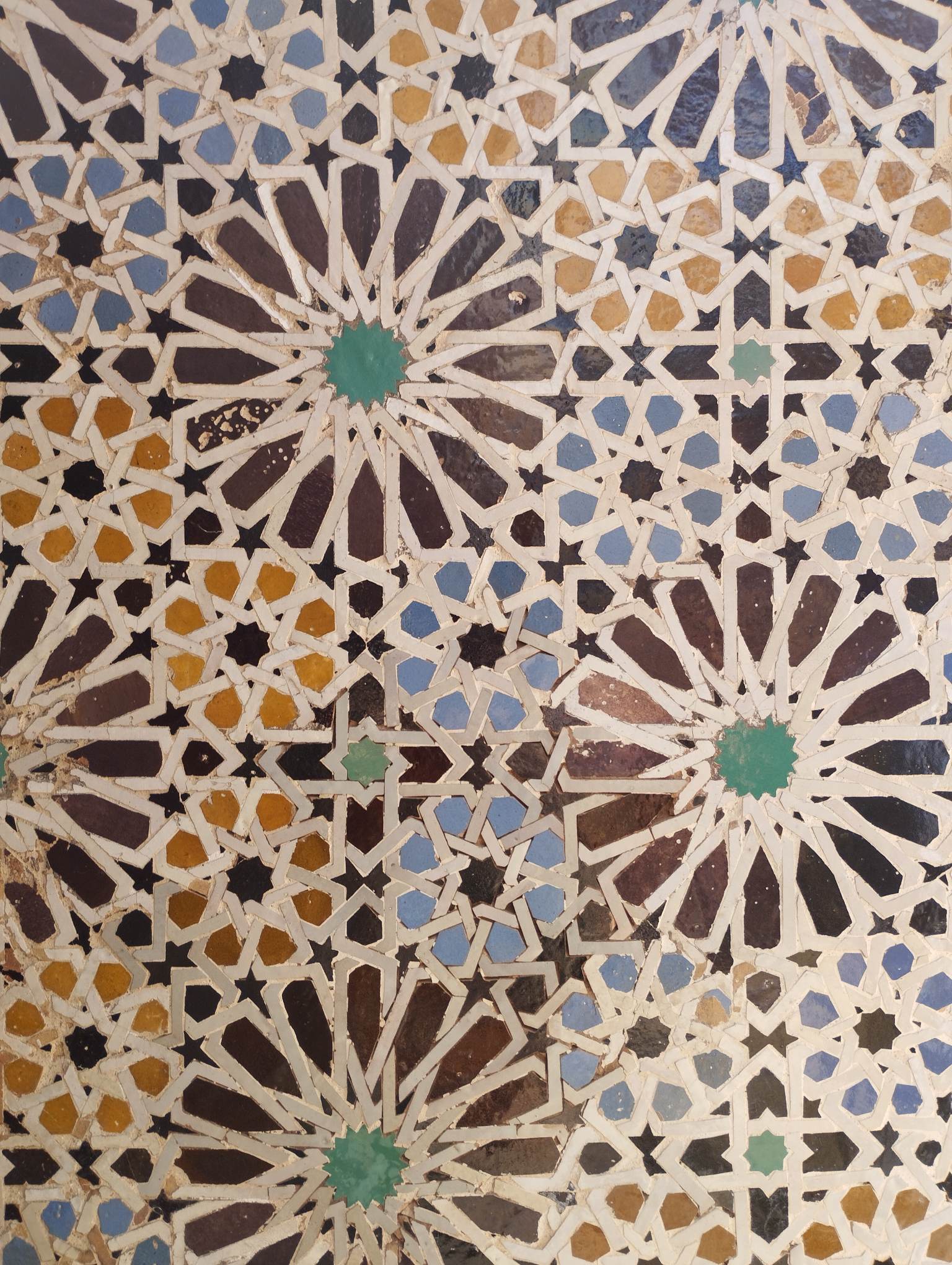
Your first stop is Bou Inania Medersa, a 14th-century Koranic school about 5 minutes’ walk down Talaa Kebira. Entrance is 20 MAD per person. It is the only medersa in Fes that still functions as a mosque, which means it has a different quality of silence to the others - students occasionally still study here. The carved cedarwood, stucco panels, and zellige tilework are extraordinary. Budget 30-45 minutes. Go up to the roof for a view over the street below.
Late Morning: Al-Attarine Medersa and Al-Qarawiyyin
Continue down Talaa Kebira - your guide will navigate the turns so you are not constantly checking your phone - and work toward the heart of Fes el-Jdid quarter.
Al-Attarine Medersa sits right next to the Al-Qarawiyyin mosque and is arguably the more beautiful of the two medersas in terms of proportions. Entrance is 20 MAD. The name means “of the spice dealers” - it was built in the 14th century to house students studying at Al-Qarawiyyin nearby. The central courtyard with its marble fountain and the carved decorations above it are genuinely exceptional.
Al-Qarawiyyin itself - founded in 859 AD and considered one of the world’s oldest universities - is not open to non-Muslims, but you can stand at the entrances and see inside. Your guide can position you at the best vantage points. Do not try to push inside; it is disrespectful and you will be asked to leave.
This section of the medina has several small souks branching off: the carpenters’ souk, the coppersmiths, the henna market. Do not feel rushed. The goal for the morning is to understand the layout rather than tick every sight.
Lunch
By noon the medina is warming up and you will be ready to eat. Café Clock on Derb el-Magana is a reliable mid-range option - the menu covers Moroccan classics and a few fusion dishes (the camel burger is their signature and is better than it sounds). A meal here runs 80-120 MAD per person. It doubles as a cultural centre so there is usually something interesting happening.
If you want cheaper, find a spot along Talaa Kebira selling harira (thick tomato and chickpea soup, around 10 MAD a bowl) and fresh-baked bread. A full lunch from a local workers’ canteen - a plate of kefta or roast chicken with bread and salad - will be under 50 MAD.
Afternoon: Tanneries and Souks
The Chouara Tanneries
The tanneries are the single image most people associate with Fes: circular stone vats filled with dye, workers standing waist-deep in hides, the whole thing visible from the leather shop terraces above.
The best approach is via Derb Chaouwara, and the viewing terraces are on the upper floors of the leather shops lining the street. Access is free - the shops want you to see the tanneries hoping you will buy leather goods. You are not obligated to buy anything. A small tip of 10-20 MAD is appropriate if you use a particular terrace for a while without purchasing.
Visit between 10am and 2pm on a weekday for the most activity in the vats. Friday mornings are quieter. The smell is significant (the vats use pigeon droppings for softening hides) - the shops provide sprigs of fresh mint. Hold it loosely under your nose. It helps a bit.
Your guide earns a commission from the leather shops. This is normal and built into the economy of Fes. You can absolutely say “I am just looking” and leave. The quality of leather goods varies wildly; if you plan to buy, your guide can steer you toward better workshops.
Afternoon Souks
With a guide, spend an hour or so looping through the specialised souks - different streets for wool, brass, cloth, spices, musicians’ instruments. The medina is large enough that you will not see everything in a day, which is fine. Let your guide take you based on your interests.
By 4-4:30pm you can release your guide and explore independently along Talaa Kebira back toward Bab Boujloud. The late afternoon light is beautiful and the pace of the medina shifts - school children, people returning from work, the calls to prayer overlapping from different mosques.
Dinner
For dinner, Ruined Garden (open 1pm-9pm) is a calm retreat from the intensity of the medina and worth the price - expect 150-250 MAD for a full meal. Dar Roumana is more formal and higher end (350-500 MAD per person), but the food is excellent Moroccan-French fusion if you want one proper restaurant meal in Fes.
For something cheaper, the stalls around Rcif square serve grilled meat, kefta, and soup into the evening for 30-60 MAD.
Day 2: High Ground and Outer Fes
Sunrise: Marinid Tombs Viewpoint
The Marinid Tombs sit on a hill north of Fes el-Bali and give you a panoramic view over the entire medina. This is the photo that makes sense of the city - the density of the streets, the green-tiled roofs of the mosques, the surrounding hills. At sunrise the light is exceptional and the call to prayer rolls over the city in waves.
The tombs themselves are 14th-century ruins of the Marinid dynasty’s royal necropolis. There is no entrance fee and they are open at all hours. Getting there by foot from the medina is possible but the uphill stretch is steep and disorienting before dawn. A petit taxi from just outside Bab Boujloud costs 20-30 MAD and takes under 10 minutes.
Go early. By 8am other visitors arrive. By 9am tour groups appear. If you go at 6:15am in summer, you will very likely have the viewpoint to yourself for 20-30 minutes. Bring a layer - it is cooler up there than in the medina.
The adjacent Borj Nord is an old Portuguese fort that now houses a weapons museum (opening hours vary; entry is nominal). It is a short walk from the tombs and worth a look if you have time.
Mid-Morning: The Mellah and Royal Palace
Come back down to the city and head to the Mellah, Fes’ Jewish quarter, adjacent to Fes el-Jdid. It is quieter than Fes el-Bali and has a different architectural character - wider streets, balconied houses that turn outward rather than inward. The community is largely gone but a few synagogues are preserved.
The Royal Palace gates (Place des Alaouites) are one of the most photographed spots in Fes. Seven enormous carved brass doors set into a tiled facade - they are genuinely impressive and worth 15 minutes. You cannot enter the palace (it is a working royal residence), but the gates alone justify the stop. The square is easy to navigate and a good place to get your bearings if the medina has been disorienting.
Late Morning: Pottery
Fes is one of the centres of Moroccan pottery, particularly the distinctive blue-painted ceramics. The Pottery Cooperative (Coopérative Poteries de Fès) is a working craft co-operative on the outskirts of the medina where you can watch the full process - wheel throwing, hand painting, kiln firing. There is no entrance fee. The shop attached sells at fixed prices, which are lower than the medina tourist souks.
The co-operative is a legitimate operation (not a commission stop your guide steers you to) and the quality is good. A small bowl or plate makes a reasonable souvenir at 50-100 MAD.
Optional Extension: Volubilis and Meknes
If you have a full second day and want to get out of the city, the combination of Meknes and the Roman ruins at Volubilis makes an excellent half-day or full day from Fes. Meknes is 60km west - a grand imperial city that most visitors skip because Fes is right there. Volubilis, 28km from Meknes, is a well-preserved Roman site that feels genuinely off the beaten track compared to the crowds at Moroccan medinas.
You can hire a grand taxi from Fes for the Volubilis-Meknes loop for around 500-700 MAD for the car (split between passengers). Entry to Volubilis is 70 MAD per person. This fits into a long morning if you leave Fes by 8am. The Fes day trips guide covers the logistics in more detail.
Practical Notes on Pace and Costs
Getting lost is part of it, but it helps to know your landmarks. Bab Boujloud to the west, Rcif square to the east, the tanneries in the northeastern quarter. Offline maps help but can misread the narrow lanes - Google Maps in particular struggles with the medina’s alleys.
Budget per person for 2 days:
- Licensed guide (Day 1, 5-6 hours): 400-600 MAD
- Medersas entry (Bou Inania + Al-Attarine): 40 MAD total
- Volubilis entry (optional): 70 MAD
- Meals (budget): 150-200 MAD/day
- Meals (mid-range): 300-450 MAD/day
- Taxis: 30-80 MAD/day
- Incidentals (tips, water, coffee): 50 MAD/day
Total for 2 days, budget approach: 700-900 MAD per person (roughly €65-85)
Booking your guide: Ask your riad the night before you arrive. Most riads have relationships with licensed guides and will arrange it for you. Alternatively, book through a reputable tour operator. Do not accept an approach on the street. A licensed guide will carry an official Ministry of Tourism badge and show it without hesitation if asked.
You can also see Fes through a small group tour that covers the key medina highlights with a licensed guide already included - the Explora Morocco tour listings include Fes options with local guides who have been working the medina for years.
For more background on the city before you visit, the Fes travel guide covers the history, neighbourhoods, and what to expect. And if you are still weighing Fes against other options, Fes vs Marrakech might be useful.
Frequently Asked Questions
Do I really need a guide for the Fes medina?
For your first day, yes - I would hire one. The medina has 9,000 streets. Even experienced Morocco travellers spend their first hours in Fes disoriented. A licensed guide does not just navigate; they explain what you are looking at, get you into better viewpoints, and help you avoid situations that waste time. From day two, you will have enough of a mental map to explore independently. The cost (300-600 MAD for half or full day) is worth it.
How much is the entrance fee for Bou Inania Medersa?
20 MAD per person as of mid-2026 (approximately €2). Al-Attarine Medersa is the same, also 20 MAD. Both are payable at the door; no advance booking needed. Bou Inania closes for Friday prayer; Al-Attarine is generally open daily, but hours can shift during Ramadan or public holidays.
Is the Marinid Tombs viewpoint worth doing at sunrise?
Yes, if you are a light sleeper and not allergic to early alarms. The view at sunrise is genuinely different from daytime - the medina looks softer, the call to prayer carries further, and you will have the place to yourself. It is free to visit, 24 hours. Take a taxi up (20-30 MAD) rather than trying to walk the hill in the dark. Sunset is also excellent, but you will be sharing it with other tourists.
What is the best time of year to visit Fes?
Spring (March to May) and autumn (September to November) are the best windows - mild temperatures, manageable crowds. Summer in Fes (July-August) is hot, sometimes over 40°C in the medina, which makes the tannery visit particularly intense. January and February can be cold and wet but the medina is much quieter. For more on timing, when to visit Morocco covers the trade-offs across seasons.
Can I visit Fes on a day trip from Marrakech?
Technically yes - there is a direct train (around 7 hours) or you can fly. But a day trip does not do justice to Fes. The city rewards two nights minimum. One full day in the medina and one day for the viewpoints and outer areas is a much more satisfying visit than cramming it into 6-7 hours. If you are short on time, prioritise Fes over some of the smaller cities on a standard Morocco route.
Where should I eat in the medina without getting taken to a tourist trap?
For lunch, look for places where locals are eating rather than where a tout is standing outside directing tourists in. A bowl of harira and fresh bread from a street stall is 10-20 MAD. For a sit-down meal, Café Clock on Derb el-Magana is a reliable mid-range option used by both locals and visitors. Avoid any restaurant directly adjacent to the tanneries viewing terraces - the ones with laminated picture menus in four languages tend to be overpriced and underwhelming. For dinner, Ruined Garden is worth it. If you want to try one of the traditional palace-style Moroccan feasts, Dar Roumana does it well.